
Best Gravel for Driveways: Types, Cost & What to Use
Crusher run ($32/ton) is the best base layer for any driveway — it compacts into a near-solid surface. Limestone #57 ($34/ton) works as a standalone surface layer for light traffic. For a finished look on a residential driveway, top with #89 limestone ($35/ton). Pea gravel looks great but migrates under tires and costs 3× more — skip it for driveways.
Disclosure: YardCalc may earn a commission from purchases or referrals made through links on this page, at no extra cost to you.
Walk into a landscape supply yard and ask for "driveway gravel" and they'll hand you a list with a dozen options. The right answer depends on what layer of the driveway you're building, what kind of traffic it needs to handle, and what your budget looks like. Pick the wrong one for the wrong layer and it either won't compact, won't drain, or won't stay put.
This guide covers every common driveway gravel type — what it is, where it belongs, what it costs, and when it makes sense. If you already know what you need and just want to calculate how much to order, jump to the calculator at the bottom.
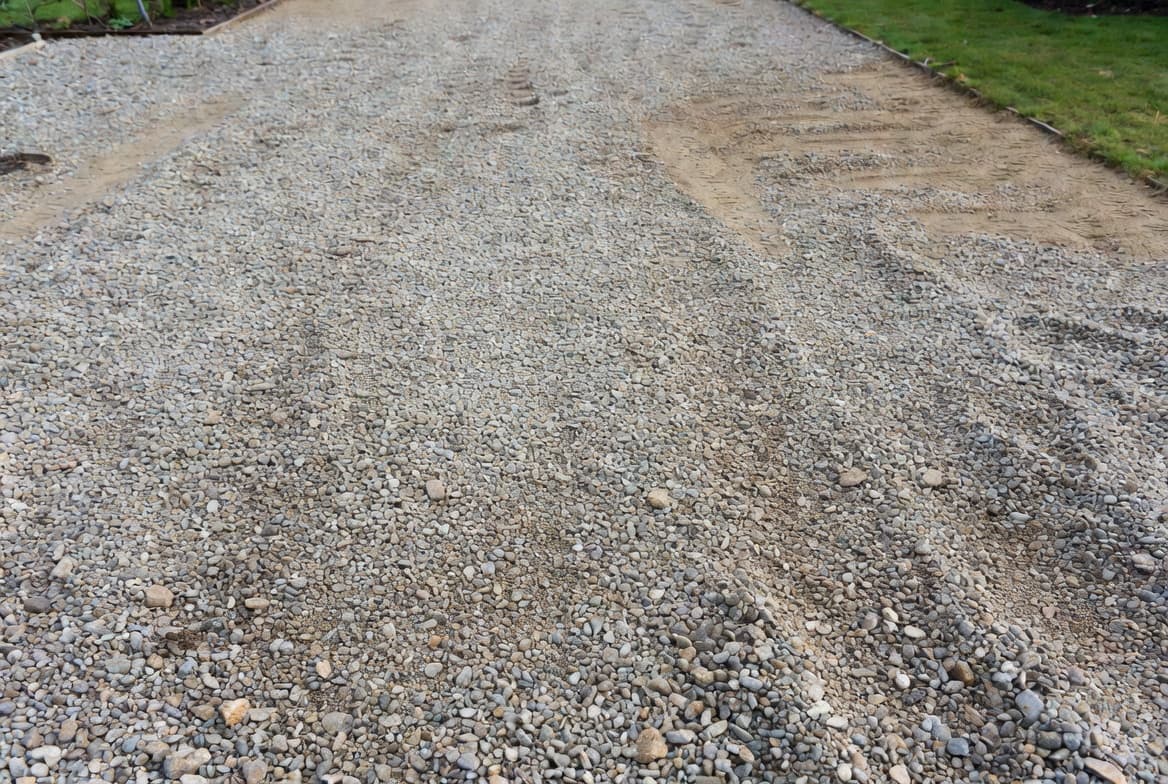
Quick Reference: Driveway Gravel by Type
| Gravel Type | Best Layer | Size | Price/Ton (approx.) |
|---|---|---|---|
| Crusher Run | Base (compacts solid) | ½" down to fines | $32.40 |
| Limestone #57 | Middle / standalone surface | ¾"–1" | $33.75 |
| Limestone #89 | Top coat / surface finish | ⅛"–⅜" | $35.10 |
| Limestone #67 | Middle / surface (single layer) | ⅛"–½" | $47.25 |
| Base Course | Engineered base layer | 1" | $45.90 |
| Limestone #4 | Drainage / heavy base | 1"–2" | $41.85 |
| Pea Gravel 3/8" | Decorative only | ⅕"–9/20" | $110.70 |
| River Rock 1"–3" | Decorative / drainage swales | 1"–3" | $162.00 |
| Crushed Concrete #2 | Budget base layer | 1½"–2½" | Contact supplier |
The 3-Layer Driveway System
Most homeowners think of a driveway as one layer of gravel. Contractors think of it as three. Understanding the layers is the key to picking the right material for each one — and knowing when you actually need all three versus when a single layer is fine.
- Base layer (4–6 inches): The structural foundation. This needs to be angular crushed stone that compacts tightly — typically crusher run or base course. It sits on native soil and carries the weight of vehicles.
- Middle layer (2–4 inches): Transitional layer that improves drainage and provides additional depth. #57 limestone is the most common choice. On shorter residential driveways with light traffic, this layer is sometimes skipped.
- Surface layer (1–2 inches): The finished top coat. Finer angular stone like #89 or #67 limestone. This is what you see, walk on, and drive over daily.
The number one driveway mistake is using only a surface layer on bare soil with no compacted base. It looks fine for the first summer and turns into a rutted mess by year two.
Crusher Run
Crusher run — sometimes called dense-grade aggregate (DGA) or processed gravel — is a mix of crushed stone ranging from ½" pieces down to fine stone dust. That combination of sizes is what makes it exceptional: the fines fill the gaps between larger pieces and the whole mass compacts into a near-solid surface when tamped.
Best for:Base layer under any driveway, shed pad, paver base, or anywhere you need structural support. It's the standard base material for good reason — nothing compacts more reliably at a lower price.
Not ideal for: Surface use on light driveways. The fine particles create a dusty, slightly muddy surface in wet conditions. Use it underneath, then top with #57 or #89.
Typical price: At $32.40/ton, crusher run is the most affordable structural gravel on this list.
Limestone #57
Limestone #57 is ¾" to 1" angular crushed limestone — the most widely used driveway and base gravel in the country. It drains well because the uniform sizing leaves air gaps, it stays in place because it's angular (not round), and it's cheap enough to use in quantity.
Best for: Middle layer in a 3-layer system, or as a standalone surface on light residential driveways with car traffic only. Also the go-to choice for French drain fill, retaining wall backfill, and under concrete slabs.
Not ideal for:Driveways that need a smooth surface. The ¾" stones are noticeable underfoot and can scatter somewhat under spinning tires. Add a finer top coat if surface comfort matters.
Typical price: Limestone #57 runs $33.75/ton.
Limestone #89
Limestone #89 is the finest angular crushed limestone in the standard sizing system — roughly ⅛" to ⅜". It spreads easily, drains well, and gives a clean, polished appearance that coarser gravel can't match. Because it's angular (not round), it still locks together and resists migration far better than pea gravel.
Best for: Top coat on residential driveways and walkways where appearance matters. The fine texture feels closer to a finished surface than larger gravel. Also useful as drainage aggregate for pipe bedding.
Not ideal for:Use as a sole layer directly on soil. Without a base underneath it will sink. It's a surface material, not a base material.
Typical price: Limestone #89 runs $35.10/ton — comparable to #57 and worth the slight premium for a finished look.
Limestone #67
Limestone #67 sits between #57 and #89 in the sizing system — ⅛" to ½" angular crushed stone. It offers better drainage than #89 (slightly larger gaps) while still providing a cleaner, finer surface than #57.
Best for: A single-layer driveway surface where you want better drainage than #89 provides, or as a middle layer that transitions between base course and a fine top coat. Particularly useful on driveways with drainage problems where you want gravel that lets water through quickly.
Typical price: Limestone #67 runs $47.25/ton — more expensive than both #57 and #89, so it makes the most sense when drainage is the primary concern.
Base Course
Base course is a crushed stone product engineered specifically for road base and driveway foundations — typically 1" angular stone blended for optimal compaction. It's similar to crusher run in purpose but has a more controlled gradation, which makes it the preferred specification on commercial projects and long rural driveways with heavy equipment traffic.
Best for: Base layer under driveways that carry heavy loads — RVs, trailers, farm equipment, delivery trucks. If your driveway needs to handle anything heavier than pickup trucks regularly, base course is a better long-term investment than crusher run.
Typical price: Base course runs $45.90/ton — a premium over crusher run, justified for heavy-load applications.
Limestone #4
Limestone #4 is larger — 1" to 2" angular stone. At that size it's too coarse to compact into a solid surface and too large to serve as a top coat. Where it excels is drainage and retaining wall backfill, where the large voids allow water to pass through freely.
Best for:Drainage aggregate behind retaining walls, drainage trenches, and heavy-load base layers where maximum drainage is the priority over compaction. Less commonly used as a driveway surface gravel, but works on farm lanes and rural access roads where surface finish isn't a concern.
Typical price: Limestone #4 runs $41.85/ton. If drainage is your problem, see our French drain guide for the right aggregate size for that application.
Pea Gravel
Pea gravel is smooth, rounded, and about ⅜" in diameter — it looks great in photos and in landscaping applications. For driveways, it has one significant problem: it doesn't stay put. Round stones have no way to interlock, so they roll under tires, migrate to the edges, and create ruts in the center of the lane within a season or two. You end up constantly raking it back into place.
Best for: Decorative walkways and garden paths with edging to contain it, spaces between pavers, and areas with foot traffic only. It can work for a decorative driveway apron if you install solid edging and accept that some migration is inevitable.
Not ideal for:Any driveway surface that sees regular vehicle traffic. Add to that the $110.70/ton price point — more than 3× the cost of crusher run — and it's hard to justify for a functional driveway.
Typical price: $110.70/ton. If you want the look, use it on walkways and decorative areas with solid edging to contain it — not the driving surface.
River Rock
River rock is smooth, rounded, and decorative — similar problem to pea gravel but larger. At 1"–3", it's uncomfortable underfoot and doesn't compact at all. It's used in drainage swales, decorative borders, and dry creek beds, not as a driving surface.
Best for:Decorative landscaping, drainage swales (where water needs to flow but visible stone looks better than crushed angular gravel), and erosion control in high-flow areas. At $162.00/ton it's the most expensive option on this list by a wide margin — use it where its appearance justifies the cost.
Skip it for driveways.If you're building a driveway and someone suggests river rock, that's a sign to get a second opinion.
Crushed Concrete
Recycled crushed concrete (sometimes labeled "pure cement #2" or "reclaimed aggregate") is demolished concrete processed back into 1½"–2½" chunks. It compacts well, drains reasonably, and is significantly cheaper than virgin limestone — often available for little or no cost from demolition contractors, or at reduced rates from recycled material suppliers.
Best for: Base layer on budget driveways and rural roads where cost is the primary driver and appearance is secondary. It performs similarly to base course at a fraction of the price if you can source it locally.
Heads up: Quality varies more than virgin limestone. Some crushed concrete contains rebar fragments, asphalt chunks, or contamination from the original site. Check the source before ordering a large quantity.
Gravel for Cold Climates: Freeze-Thaw Considerations
In northern states where the ground freezes, gravel driveways face a specific challenge: frost heave. Water in the soil expands when it freezes, pushing the base upward and creating humps and ruts that flatten again in spring — but not back to level. Over several winters, an improperly built driveway becomes a washboard.
- Use angular stone, not round. Angular gravel interlocks slightly and resists displacement from heaving better than smooth stone.
- Go deeper on the base. Frost penetrates less deeply into well-drained aggregate than into clay or silt. A 6-inch base course layer (instead of 4 inches) gives the freeze front less opportunity to disrupt the surface.
- Mark your driveway edges before winter.Snow plows and shovels push gravel off the driveway when they can't see the edges. Driveway markers are cheap insurance against losing a few inches of gravel every season.
Residential Driveways vs. Rural Roads
Most of the gravel choices above apply to both, but scale and traffic change the calculus:
| Factor | Residential Driveway | Rural Road / Long Driveway |
|---|---|---|
| Typical length | 20–100 ft | 200 ft–1+ mile |
| Traffic load | Cars, occasional pickup | Pickups, tractors, delivery trucks |
| Best base | Crusher run, 4–6 inches | Base course, 6–8 inches |
| Best surface | #57 or #89 limestone | #57 limestone, replenish annually |
| Width | 10–14 ft (single car) | 12–16 ft for two-way passage |
| Drainage priority | Moderate | High — crown and ditching essential |
For private roads and long driveways, see the gravel road calculator guide — it covers material needs by the linear foot and the crowned road profile that keeps rural driveways from becoming mud channels.
Cost Comparison by Driveway Size
To put the price differences in context, here's what a standard single-car driveway (12 ft × 40 ft) costs with different gravel types at a 4-inch surface depth, material only:
| Gravel Type | Tons Needed | Material Cost | Notes |
|---|---|---|---|
| Crusher Run (base) | ~8 tons | ~$260 | Foundation layer |
| Limestone #57 (surface) | ~8 tons | ~$270 | Good standalone choice |
| Limestone #89 (top coat) | ~8 tons | ~$280 | Cleanest finished look |
| Pea Gravel | ~8 tons | ~$885 | Not recommended for driveways |
| River Rock | ~8 tons | ~$1,296 | Decorative use only |
How Much Gravel Do You Need?
Use the calculator below to get exact cubic yards and tons for your driveway dimensions. Calculate each layer separately if you're doing a base + surface build — set the depth to your base layer depth for the first calculation, then your surface depth for the second.
Driveway Gravel Calculator
Enter your driveway length, width, and gravel depth to get cubic yards and tons.
Enter your dimensions above to calculate gravel needed.
💡 1 cubic yard of gravel covers approximately 100 sq ft at 3 inches deep
Need more detail on the quantity math — including how to handle multiple layers and account for compaction? See the gravel driveway quantity guide for a full walkthrough.
Installation Tips
- Compact in 2-inch lifts.Dumping 6 inches and running a compactor over the top once doesn't work. Add material in 2-inch layers and compact each one.
- Install landscape fabric under the base layer. On clay or silt soil, a layer of geotextile fabric between native soil and gravel prevents the two from mixing over time. Without it, clay works its way up into the base and the gravel gradually disappears into the ground.
- Crown the road. The center of the driveway should be slightly higher than the edges so water sheds to the sides rather than pooling in the driving lane. A 2-inch crown across a 12-foot width is standard.
- Add 5–10% extra to your order. Gravel compacts, and subgrades are never perfectly flat. The cost of an extra half-yard is trivial; the cost of a second delivery is not.
Frequently Asked Questions
- What is the best gravel for a driveway?
- Base layer: crusher run(compacts best). Middle: #57 crushed stone. Top: #57 or #67 limestone. Avoid all-round stone — it doesn't bind and migrates off the edges.
- How thick should each gravel layer be?
- A 3-layer driveway: 4 inches base (crusher run), 2 inches middle (#57), 2 inches top layer. Compact each layer before adding the next.
- Does driveway gravel need to be compacted?
- Yes. Uncompacted gravel ruts and migrates. Compact each 2-inch lift with a plate compactor. Worth renting one for any full driveway build.
- What is crusher run?
- A mix of crushed stone and stone dust (fines). The fines fill voids between larger pieces, creating a dense, locked surface. It's the most stable base material and costs $25–$40/ton.
Ready to run the numbers?
Enter your driveway dimensions and get cubic yards, tons, and a cost estimate — free.
Calculate My Driveway Gravel