
Raised Garden Beds: Complete Planning & Building Guide
A 4×8 ft raised bed costs $50–$250 for the frame depending on material (cedar, galvanized metal, or fabric), plus $35–$170 for soil. Metal beds last 10–20 years and are the best value over time. Fill with a 60/30/10 mix of topsoil, compost, and perlite for most vegetables.
Disclosure: YardCalc may earn a commission from purchases or referrals made through links on this page, at no extra cost to you.
Raised garden beds have one of the best return-on-investment of any yard project. You control the soil completely, drainage is built-in, and you can start growing the same week you build. The challenge is choosing the right size, material, and soil mix — and not overspending on any of them.
This guide covers everything you need to go from planning to planting: which bed material lasts longest, how to size a bed for what you want to grow, what it actually costs, and the soil mix that works for almost any vegetable.
Raised Bed Soil Calculator
Before picking your bed, figure out how much soil you need — it's often the biggest line item. Enter your planned bed dimensions below.
Enter your dimensions above to calculate raised bed soil needed.
💡 A standard 4×8 ft raised bed at 12 inches deep needs about 1.19 cubic yards of soil mix
Wood vs. Metal vs. Fabric: Which Raised Bed Material Is Best?
The frame material is the first decision — and the one most people get wrong by defaulting to cheap untreated lumber that rots in two seasons.
| Material | Lifespan | Cost (4×8 ft bed) | Best For |
|---|---|---|---|
| Untreated pine / spruce | 2–4 years | $20–$40 | Testing the concept; expect to replace soon |
| Cedar | 10–15 years | $80–$150 | Classic look, naturally rot-resistant, no chemicals |
| Redwood | 15–20+ years | $120–$200 | Best natural wood option; expensive and hard to find |
| Galvanized steel (corrugated) | 15–25 years | $100–$250 | Best long-term value, modern look, very durable |
| Powder-coated steel (kit) | 10–20 years | $120–$200 | Clean appearance, rounded safety edges, quick assembly |
| Fabric grow bags | 3–8 years | $15–$40 | Renters, small spaces, mobility; roots air-prune naturally |
| Composite / recycled plastic | 20+ years | $150–$300 | No rot, no splinters, child-safe; heavier upfront cost |
Metal Raised Beds: The Best Long-Term Value
Galvanized and powder-coated metal beds have surged in popularity for good reason: they last two to three times longer than cedar at a comparable price, they don't warp or rot, and they look clean in any yard. The main concern people raise — zinc leaching from galvanized steel — is not supported by research at garden-bed concentrations.
When shopping for a metal bed, look for:
- Rolled or safety-edged top rails — sharp cut metal edges are a real hazard, especially with kids around.
- Powder coating vs. bare galvanized — powder coating adds UV and scratch resistance and comes in colors that match your yard.
- Wall thickness — thicker gauge (lower number) means less flex. 20-gauge is the minimum for a bed over 12 inches tall.
- Depth — 24 inches is ideal for root vegetables; for most vegetables 18 inches is plenty.
Recommended Raised Bed Options
Once you've settled on size and depth, the next step is choosing the type of bed. Here are two solid paths depending on your budget and how long you plan to use it.
Budget-friendly option
If you're just getting started or trying to keep costs down, a basic galvanized bed like this ANLEOLIFE galvanized raised garden bed works well for most setups. It's straightforward to assemble and gives you enough depth for vegetables without spending a ton upfront.
More durable, long-term option — what I use
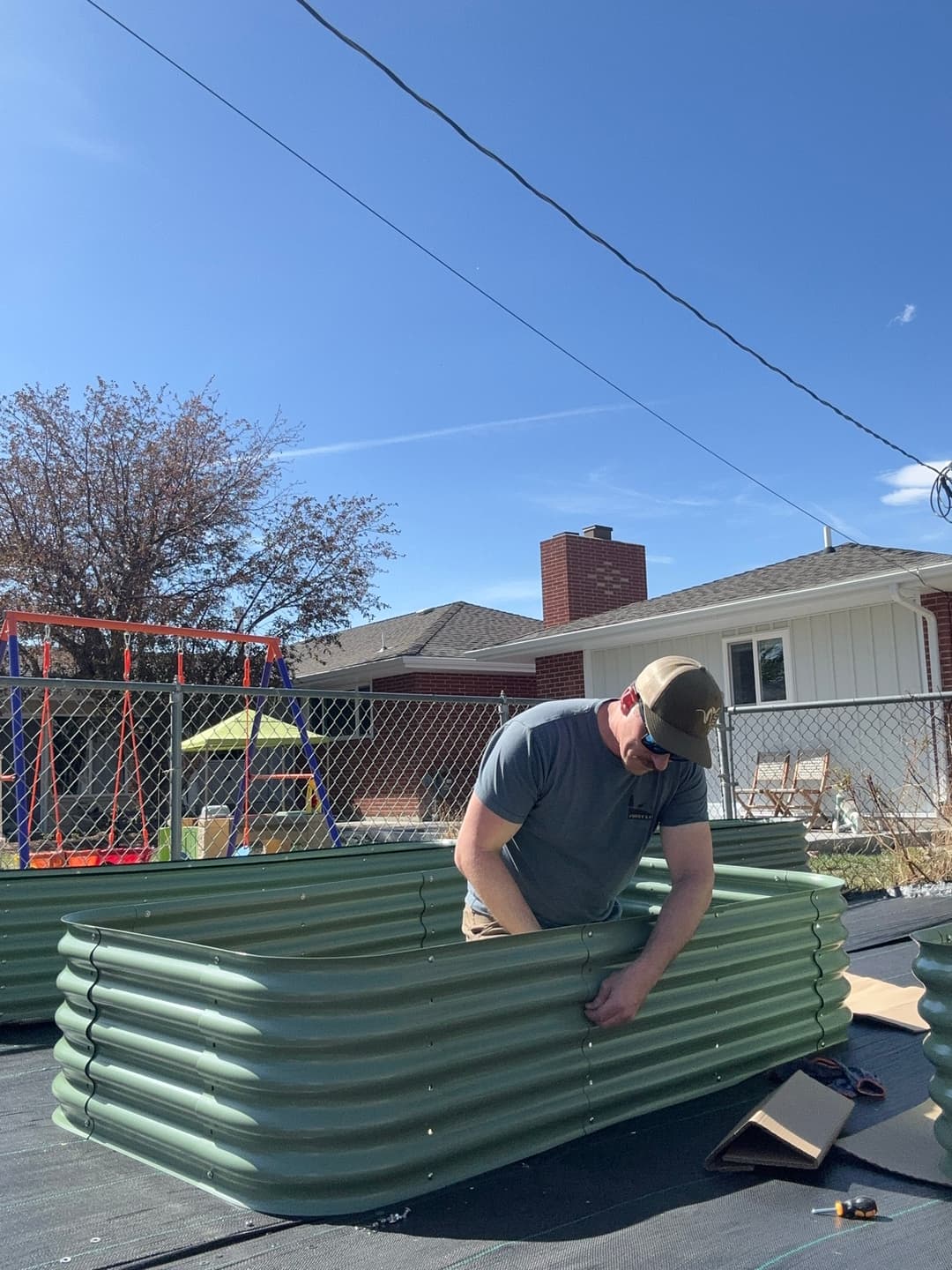
If you're planning to use this for multiple seasons or want something more flexible, a modular metal system like this VEGEGA 17-inch 6-in-1 bed is a step up. The panels are thicker, the layout is adjustable, and the extra depth makes a difference for root growth. They offer around 10% off with code YardCalc.
They also make a 32" standing-height version for people who want to garden without bending at all. My back votes yes every spring—it's just a bit more of an investment, so it depends how serious you are about it.
For seasonal maintenance after the growing season, see our guide to fall raised-bed maintenance.
How to Size Your Raised Bed
The most important sizing rule: never build a bed wider than 4 feet. You should be able to reach the center from either side without stepping in — compacted soil is the enemy of root growth.
| Bed Size | Good For | Soil Needed (12" deep) |
|---|---|---|
| 2×4 ft | Herbs, lettuce, one side of a patio | 0.3 yd³ |
| 4×4 ft | Square foot gardening, starter bed | 0.6 yd³ |
| 4×8 ft | Most popular; tomatoes + salad greens together | 1.2 yd³ |
| 4×12 ft | Serious vegetable garden; 2–3 plant families | 1.8 yd³ |
| 8×4 ft (2 ft deep) | Deep-rooted crops; root vegetables; max yield | 2.4 yd³ |
Use our raised bed soil calculator to get the exact volume for any custom dimensions.
Raised Bed Soil Mix: What Actually Works
Don't fill a raised bed with straight topsoil — it compacts solid within one season. The goal is a mix that drains freely, holds moisture between waterings, and stays loose enough for roots to penetrate without resistance.
The two proven recipes:
| Recipe | Components | Best For | Approx. Cost per yd³ |
|---|---|---|---|
| Standard 60/30/10 | 60% topsoil, 30% compost, 10% perlite | Most vegetables, flowers, general use | $35–$65 bulk |
| Mel's Mix | ⅓ peat/coir, ⅓ blended compost, ⅓ vermiculite | Intensive small beds, square foot gardening | $80–$130 (pricier components) |
For the topsoil component, screened topsoil at $25–$50/yd³ is the right grade — don't use unscreened fill topsoil which can be half gravel. See our topsoil cost guide for current prices and where to source it.
Depth Guide by Crop
Bed depth is often underestimated. Most kit beds are 6–12 inches — fine for lettuce and herbs, limiting for tomatoes and root vegetables.
| Depth | Suitable Crops | Not Suitable For |
|---|---|---|
| 6 inches | Lettuce, spinach, herbs, radishes, strawberries | Tomatoes, peppers, root vegetables |
| 10–12 inches | Peppers, beans, peas, most flowers, bush tomatoes | Carrots, parsnips, potatoes |
| 18 inches | Indeterminate tomatoes, cucumbers, squash | Longer root vegetables |
| 24 inches | Everything — carrots, potatoes, sweet potatoes, deep-tap plants | — |
Total Cost to Build a Raised Bed (2026)
Here's a realistic all-in cost breakdown for the most popular bed size: 4×8 ft at 12 inches deep.
| Item | Budget Option | Mid-Range | Premium |
|---|---|---|---|
| Frame | $25 (pine) | $120 (cedar or metal kit) | $180–$250 (thick-gauge metal or composite) |
| Soil (1.2 yd³ bulk) | $42 (screened topsoil + compost DIY) | $65 (blended garden mix bulk) | $130–$160 (bagged premium mix) |
| Hardware cloth (bottom liner) | $0 (skip if no gophers) | $15–$25 | $15–$25 |
| Delivery (if ordering bulk soil) | $0 (pick up yourself) | $50–$150 | $50–$150 |
All-in range: $67–$435 depending on choices. Most homeowners land at $150–$280 for a solid first bed. The frame is a one-time cost; plan to refresh soil with compost each spring for $15–$30/year.
Do You Need a Weed Barrier or Bottom Lining?
Two separate questions that often get conflated:
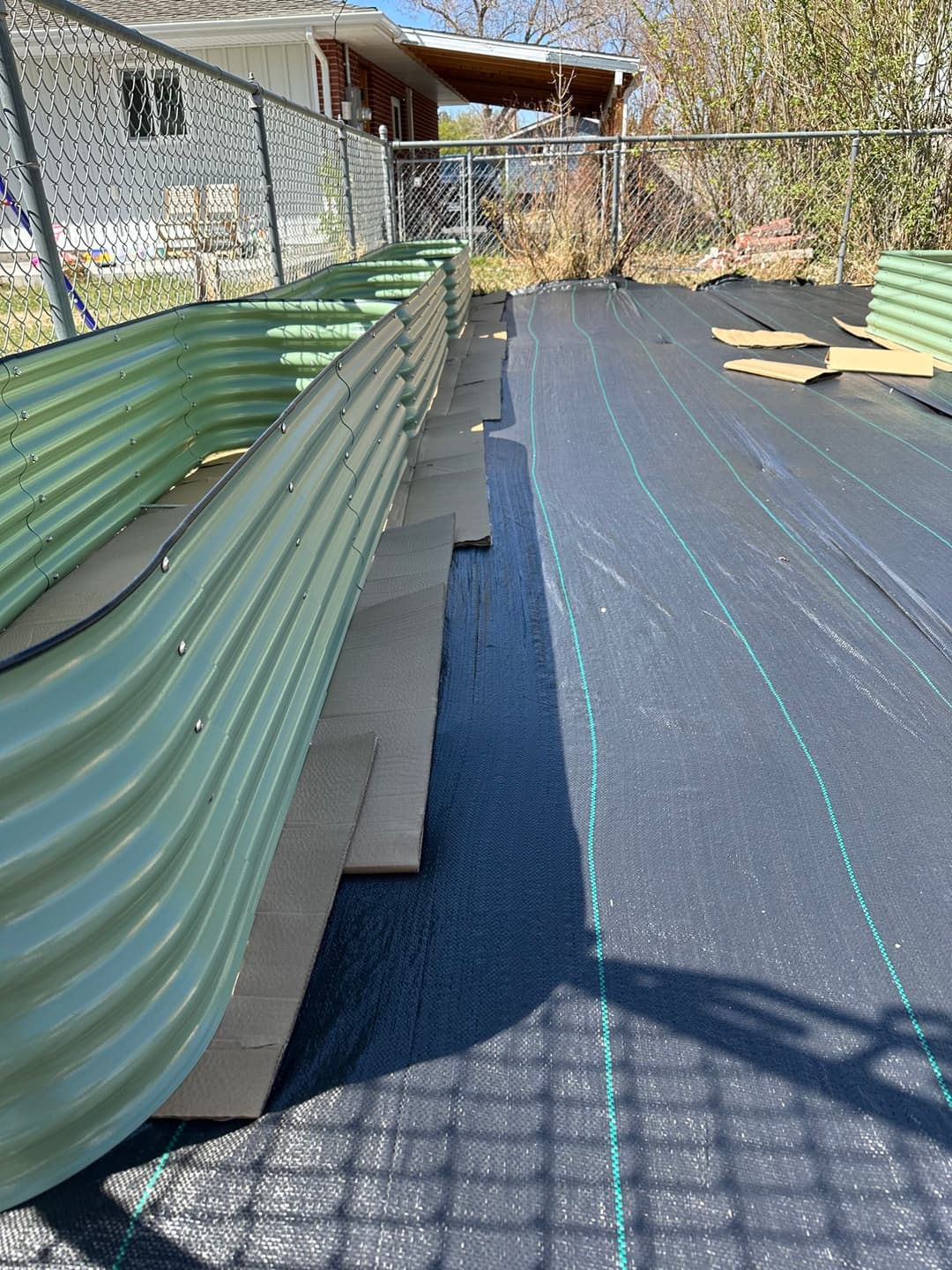
- Weed barrier fabric on the bottom?Optional — and it depends on what you're trying to stop. Quality permeable landscape fabric (woven, not solid plastic) lets water drain freely, so drainage isn't really the concern. The actual tradeoffs: it slows worm movement between the native soil and your bed, and persistent weeds will eventually push through it in 2–3 seasons regardless. If you're placing beds over aggressive grass or weeds, a layer of cardboard plus weed barrier is a reasonable short-term fix — just use a breathable woven fabric, not impermeable plastic sheeting.
- Hardware cloth on the bottom? Yes, if you have voles, gophers, or moles. Use ½-inch galvanized hardware cloth (not chicken wire — openings are too large). Staple or wire it to the frame before filling.
- Cardboard as a base layer? Yes — a layer of corrugated cardboard (remove tape and staples) smothers grass, breaks down in one season, and adds organic matter. Free from any appliance store.
Keeping Animals Out
Raised beds attract more than gardeners. Squirrels, rabbits, deer, and groundhogs can wipe out a bed overnight. The right protection depends on what you're dealing with:
- Rabbits and groundhogs: A 2–3 ft wire mesh fence around the bed is enough. Bury the bottom edge 6 inches into the ground or bend it outward — they dig.
- Squirrels and chipmunks:Hardware cloth laid flat over the soil between seedlings, or a lightweight row cover frame. They're after seeds and bulbs more than mature plants.
- Deer: Need at least 8 ft of height or a double fence (two shorter fences 3 ft apart confuses them). For a single raised bed, a hoop house frame with bird netting is the most practical solution.
- Voles and moles: A ¼-inch galvanized hardware cloth buried 6–12 inches below the bed floor is one of the most effective ways to stop burrowing pests — the tight mesh blocks even small voles that slip through standard ½-inch cloth. Cut it to size, lay it flat before filling, and staple or wire it to the frame walls so it can't shift. (Not sure how much soil you'll need once the cloth is down? Calculate it here.)
Where to Place Your Raised Bed
- Sun: Minimum 6 hours of direct sun for vegetables. 8+ hours is ideal for tomatoes and peppers. Leafy greens tolerate 4–6 hours.
- Water access: Within reach of a hose, or plan a drip line. Raised beds dry out faster than in-ground beds — especially in summer.
- Level ground: Beds on a slope retain soil unevenly and water channels to one end. Level the site or build with a tiered design.
- Away from black walnut trees: Black walnut roots release juglone, which is toxic to tomatoes, peppers, and many other crops. Keep beds at least 50 ft away.
What to Plant First
For a first-season raised bed started in spring, these crops are forgiving and high-yield:
- Lettuce and salad greens — harvest in 4–6 weeks, continuous cut-and-come-again. Good use of early spring space before warm-season crops go in.
- Tomatoes (1–2 plants per 4×4 ft) — most rewarding summer crop. Indeterminate varieties need caging; keep to 1 per 4 sq ft of bed space.
- Zucchini (1 plant per 4×8 bed) — overproduces to the point of comedy, requires very little effort.
- Bush beans — fast, heavy producer, improve soil nitrogen for the following season.
- Herbs (basil, parsley, chives) — fill corners and edges, useful all season.
That list is a starting point, not the whole plan. For help deciding what to grow around your own frost dates, days-to-maturity, and storage goals, see our guide to planning a backyard food garden.
If you're gardening somewhere with a shorter summer, our guide to the best vegetables for a short growing season breaks down which crops are the most forgiving and which need extra planning.
Next Step: Figure Out How Much Soil You Need
Before you order anything, run the numbers on soil — it's almost always the biggest cost. Enter your bed dimensions in our raised bed soil calculator to get exact cubic yards and a cost estimate. If you're sourcing topsoil separately, our topsoil cost guide covers current bulk prices, delivery fees, and where to find cheap or free topsoil locally.
Frequently Asked Questions
- How deep should a raised garden bed be?
- 6 inches minimum for most vegetables. 12 inches for root crops like carrots. 8–10 inches is the most practical depth for a mixed vegetable bed.
- What is the best soil mix for a raised bed?
- The 60/30/10 mix: 60% topsoil, 30% compost, 10% perlite. Avoid native garden soil — it compacts in raised beds and drains poorly.
- How much soil for a 4×8 raised bed?
- At 10 inches deep: ~1 cubic yard (about 18 two- cubic-foot bags). At 12 inches: ~1.19 yards.
- What wood is best for raised beds?
- Cedar (lasts 15–20 years, naturally rot-resistant, safe for food). Douglas fir is cheaper but lasts 5–10 years. Avoid old CCA-treated lumber near food crops.
Related Calculators & Guides
- Raised Bed Soil Calculator — soil volume for any bed dimensions
- Topsoil Cost Guide — current prices for screened topsoil, bulk delivery, and bagged options
- How Much Topsoil Do I Need? — depth guide and cost by project type
- Topsoil Calculator — cubic yards and cost for any area
- Mulch Calculator — for the paths between your beds
Ready to run the numbers?
Enter your bed dimensions and get exact soil volume, bag count, and a cost estimate — free.
Calculate My Raised Bed Soil