
River Rock vs. Mulch: Which Is Better for Landscaping?
Mulch wins on upfront cost ($30–$55/yd³ vs. $45–$90/yd³ for river rock) and soil health. River rock wins on long-term cost (no replacement) and maintenance. Over 10 years on a 200 sq ft bed, mulch costs roughly 3–5x more than rock once you factor in annual top-ups. Use mulch for vegetable gardens, new plantings, and areas where soil improvement matters. Use river rock for dry creek beds, drainage areas, and low-maintenance permanent landscaping.
Disclosure: YardCalc may earn a commission from purchases or referrals made through links on this page, at no extra cost to you.
Choosing between river rock and mulch affects far more than how your landscape looks. One improves your soil every year but requires ongoing maintenance. The other can last decades with almost no upkeep — but won't do anything for the plants growing underneath it.
Neither is universally better. The right choice depends on what you're planting, how much maintenance you're willing to do, and whether you're building a permanent landscape or one that changes over time. This guide covers cost, maintenance, soil health, weed control, and which material wins for each application — with real numbers.
Quick Decision Guide
| If your priority is… | Better choice |
|---|---|
| Lowest upfront cost | 🌿 Mulch |
| Lowest long-term maintenance | 🪨 River Rock |
| Best 10-year cost on a large bed | 🪨 River Rock |
| Soil health & moisture retention | 🌿 Mulch |
| Vegetable & annual flower beds | 🌿 Mulch |
| Dry creek beds & drainage areas | 🪨 River Rock |
| Modern or xeriscaping designs | 🪨 River Rock |
| Around established trees & shrubs | Either — see below |
| Drip irrigation zones | 🪨 River Rock (doesn't compete with emitters) |
Head-to-Head: 4 Key Metrics
Upfront Cost
🪨 Rock
🌿 Mulch
🌿 Mulch wins
Maintenance
🪨 Rock
🌿 Mulch
🪨 Rock wins
Soil Health
🪨 Rock
🌿 Mulch
🌿 Mulch wins
Drainage
🪨 Rock
🌿 Mulch
🪨 Rock wins
Upfront Cost Comparison
Mulch has the lower upfront price in almost every market. Standard bulk hardwood mulch runs $30–$55 per cubic yard. River rock starts at around $45–$65 per cubic yard for small to medium bulk sizes, and climbs to $90–$175 for decorative varieties.
| Material | Bulk cost (yd³) | 200 sq ft bed, 3 in deep (1.85 yd³) |
|---|---|---|
| Hardwood mulch | $30–$55 | $56–$102 |
| Cedar / pine bark mulch | $40–$65 | $74–$120 |
| River rock (small, 3/4 in) | $45–$65 | $83–$120 |
| River rock (medium, 1–3 in) | $60–$90 | $111–$167 |
| Decorative river rock | $90–$175 | $167–$324 |
For standard varieties, the initial cost difference between mulch and river rock is often smaller than people expect — especially for small beds. The bigger difference shows up over time.
10-Year Cost: Where Rock Usually Wins
Mulch decomposes. That is both its main advantage (it improves soil) and its main cost driver. A well-maintained mulch bed needs topping up every 1–2 years. River rock never needs replacing under normal conditions.
| Material | Year 1 cost | Annual upkeep | 10-year total (200 sq ft) |
|---|---|---|---|
| Hardwood mulch (refreshed every 2 yr) | ~$80 | ~$40/yr avg | ~$440 |
| Cedar mulch (refreshed every 2–3 yr) | ~$100 | ~$33/yr avg | ~$430 |
| River rock (small, no replacement) | ~$100 | ~$0 | ~$100 |
| River rock (medium, no replacement) | ~$140 | ~$0 | ~$140 |
On a large or complex landscape with multiple beds, this adds up fast. For many installations, the higher upfront cost of decorative landscape rock is often offset after several years because the stone rarely needs replacing while mulch is refreshed periodically. The exact timeline depends on local pricing, labor costs, and how often mulch needs refreshing in your climate. These estimates do not include labor or delivery, which apply to both.
Maintenance
This is where river rock's long-term advantage is clearest.
Mulch requires annual attention: checking depth, raking settled areas, removing debris, topping up where it has thinned. Color fades within a season or two on dyed mulch. Organic matter breaks down faster in wet or hot climates, meaning more frequent refreshes.
River rock needs occasional debris removal — leaves blow in and need to be raked or blown out — but the stone itself requires no replacement. The main maintenance concern is weeds sprouting from wind-blown seeds that land on top, which is true of any groundcover.
If you want a landscape feature that looks nearly the same in year ten as it did in year one without ongoing material purchases, river rock is the more reliable choice.
Soil Health
Mulch wins this category clearly. Organic mulch — wood chips, hardwood bark, pine needles — slowly decomposes into the soil, contributing organic matter, improving structure, and supporting microbial activity. Each time you refresh the mulch layer, you are also amending the top inch or two of soil.
River rock does not improve soil. It is permanent, which means if your soil quality is poor, it stays poor. This is one reason river rock is best suited to established plantings and drought-tolerant species rather than areas requiring continuous soil improvement.
For vegetable gardens, new tree and shrub plantings, annual flower beds, and any situation where improving soil over time is the goal, organic mulch is the better choice. This is one reason arborists often recommend organic mulch around young trees — the gradual decomposition benefits the root zone in ways that permanent rock cannot replicate. See our soil preparation guide for how mulch fits into a broader soil improvement plan.
Water & Drought Tolerance
Mulch moderates soil temperature and reduces evaporation, which means plants typically need less frequent watering — particularly new transplants and annuals. This benefit is most pronounced in hot, dry conditions.
River rock behaves differently. The stones themselves absorb heat during the day and release it at night. In a hot climate, a bed covered in dark-colored river rock can run noticeably warmer at soil level than a mulched bed of the same size. This is a disadvantage for moisture-sensitive plants, but it can actually be beneficial for heat-loving drought-tolerant species that prefer warm, dry conditions.
There is one situation where landscape rock has a practical advantage over mulch even in wet climates: anywhere water flows. Mulch can float and redistribute under a downspout, wash down a slope in heavy rain, or scatter out of a drainage channel. River rock stays put. For any area near downspouts, on a slope, or in a drainage path, rock is the more reliable choice regardless of plant type.
| Plant type | Better groundcover | Reason |
|---|---|---|
| Vegetables & annuals | Mulch | Moisture retention, soil improvement |
| Newly planted shrubs | Mulch | Reduces transplant stress, aids establishment |
| Established ornamental grasses | Either | Tolerant of both; rock adds texture contrast |
| Drought-tolerant perennials (lavender, sage) | River rock | Better drainage, heat benefit, minimal watering |
| Succulents & cacti | River rock | Avoids crown rot; mimics natural habitat |
| Native plantings & xeriscaping | River rock | Low water, permanent, no annual input |
For drip-irrigated beds, river rock actually pairs well — it does not interfere with emitters or tubing the way shifting mulch can. See our drip irrigation calculator for zone planning.
Weed Control
Neither material completely eliminates weeds. The majority of weed pressure in any maintained bed comes from wind-blown seeds landing on top of the groundcover — not from seeds germinating from below.
Both materials suppress weeds effectively when installed correctly: clean soil, edged beds, and adequate depth (3 inches minimum for both). The installation quality matters more than the material choice.
Landscape fabric under rock is worth installing in most permanent decorative applications. It prevents the rock from gradually sinking into soil and blocks weeds from below. Use woven fabric, not thin plastic — woven fabric allows water penetration, breathes, and does not tear at edges. A heavy-duty woven landscape fabric is generally a better choice than thin plastic weed barrier — it allows water through while helping keep rock separated from the soil below.
Landscape fabric under mulch is more debated. Because mulch decomposes, organic matter eventually accumulates above the fabric, creating a seedbed on top of it. Most experienced gardeners skip fabric under mulch and simply maintain adequate depth and a clean edge instead.
Where River Rock Works Best
Decorative landscape rock is the right material when permanence and drainage performance matter more than soil improvement.
- Around foundation shrubs: Established shrubs that do not need annual soil improvement do well with a permanent landscape rock bed. Provides drainage at the foundation line and eliminates recurring material cost.
- Drainage areas & downspout splash pads: River rock dissipates water energy and stays put under heavy flow. Mulch floats and redistributes. For areas that carry sustained water flow rather than occasional splashing, see our French drain guide for the right aggregate sizing.
- Dry creek beds: River rock is the defining material here — nothing else creates the right look or handles intermittent water flow as well. Use 1–3 inch rock for channel fill, larger accent stones along the banks. See our river rock calculator for dry creek bed estimates.
- Modern & minimalist landscape designs: Clean lines and consistent texture. Decorative landscape rock maintains its appearance year-round without seasonal refreshing.
- Xeriscaping & native plant borders: Low-water landscapes benefit from the drainage and heat properties of rock. Plants selected for dry conditions often perform better in river rock than in mulch.
For any of these applications, compare bulk river rock delivery pricing before ordering bags — bulk is almost always cheaper for anything over 50 square feet. Use code MEADOWLARK for 5% off.
Where Mulch Works Best
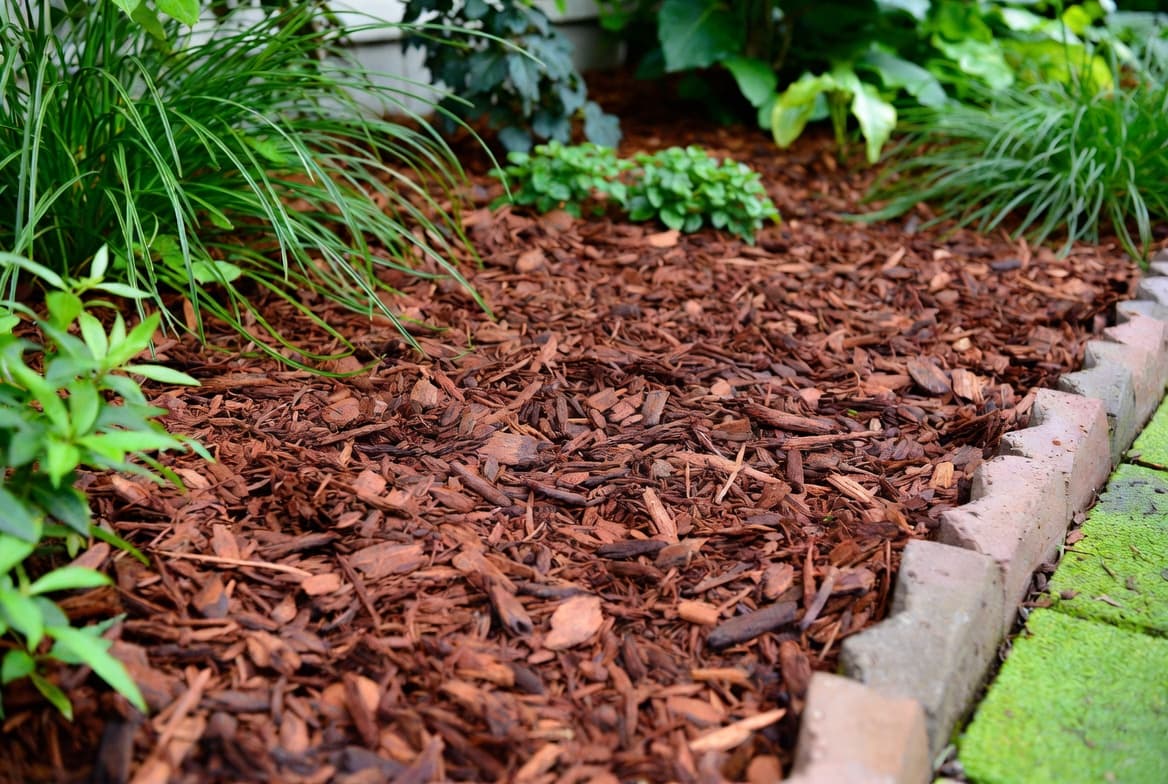
Mulch is the better material any time soil improvement and plant health are priorities over permanence.
- Vegetable & annual flower beds: Mulch improves soil each season. River rock does nothing for vegetables and makes replanting much harder.
- Newly planted trees & shrubs: A 3-inch mulch ring (kept away from the trunk) reduces transplant stress, moderates soil temperature, and retains moisture during establishment.
- Fruit trees: Organic mulch applied 2–4 inches deep in a wide ring around fruit trees suppresses grass competition, retains moisture during fruiting, and gradually improves the soil in the root zone each season.
- Raised beds: Straw, compost, or wood chip mulch on the surface of a raised garden bed improves soil structure each year. Rock on a raised bed is essentially decorative and adds zero benefit to the growing medium.
- Areas you plan to replant: Mulch lifts easily and breaks down into soil. River rock is permanent — removing it is labor-intensive and rarely worth doing.
Use the mulch calculator to estimate bulk cubic yards or bag count for your beds. For larger beds, bulk mulch delivery is significantly cheaper than bags. Use code MEADOWLARK for 5% off your first order.
Using Both: The Most Common Smart Approach
Most well-planned landscapes use both materials, each placed where it performs best. This is not a compromise — it is intentional design.
Common combination approach
The practical split for most yards: use river rock for permanent drainage and hardscape-adjacent areas; use mulch for active planting zones. The two materials are complementary rather than competing.
What to Consider Before You Order
- ☐Is this a permanent feature or will you replant? Permanent → rock. Changing annually → mulch.
- ☐What plants are going in? Vegetables, annuals, new plantings → mulch. Drought-tolerant or established perennials → either.
- ☐Does this area carry water? Drainage swales and dry creek beds → always rock.
- ☐What is your maintenance tolerance? Annual refresh is fine → mulch. Set it and forget it → rock.
- ☐Do you have drip irrigation? River rock works better around drip tubing long-term.
- ☐Measure your bed area before ordering either material — both are sold by the cubic yard in bulk.
Calculate Your Project
Both materials use the same formula: area (sq ft) × depth (in) ÷ 324 = cubic yards. Use the calculators below before calling any supplier — knowing your cubic yard and ton requirements before the call almost always results in a better price.
For decorative stone, dry creek beds, and drainage applications, use the river rock calculator. For bark, wood chips, and organic mulch, use the mulch calculator. If you are planning a new bed that needs soil prep first, the topsoil calculator covers the soil layer before you cover it with mulch or rock.
Ready to run the numbers?
Get cubic yards, tons, and cost estimates for your project — enter dimensions and pick your depth.
Calculate River Rock