
Best Vegetables for a Short Growing Season: A Cold-Climate Garden Guide
Cold-tolerant, fast-maturing crops like spinach, peas, radishes and lettuce are the most reliable short-season choices. Warm-season crops such as bush beans and summer squash can still work if you wait for real warmth. Longer-season crops like tomatoes, peppers, corn and winter squash need an indoor head start and careful variety selection — the exact cultivar's days-to-maturity matters more than the vegetable's name.
A short growing season doesn't mean you're limited to radishes and lettuce. It does mean you have less room for error.
I garden in Cody, Wyoming, where spring freezes can hang around and fall can arrive before a long-season crop is ready to cooperate. That has changed what I look for when choosing vegetables. I still want tomatoes. I still want squash. I still want crops that can be stored for winter. But I've learned that the question isn't simply “Will this vegetable grow here?” It's “Will this particular variety mature here with enough margin to make it worth the space?”
That distinction matters.
A vegetable garden in a short-season climate works best when it combines crops that tolerate cold, crops that mature quickly, warm-season crops with realistic maturity times, storage crops, succession plantings, and a few longer-season crops that are worth the extra work.
If you're planning the whole garden rather than choosing individual vegetables, start with the YardCalc guide to planning a backyard food garden, then use this page to decide which crops fit your season.
What Counts as a Short Growing Season?
There isn't one official number. A growing season can be limited by late spring freezes, early fall freezes, cool soil, elevation, cold nights, local topography, wind exposure, or unusually cool summers.
Here in Wyoming, the constraint is real. The Wyoming State Climate Office's Wyoming Climate Atlas says late spring freezes and early fall freezes are typical, and estimates the average freeze-free period in the state's principal agricultural areas at roughly 125 days.
That does not mean every Wyoming garden gets 125 usable vegetable-growing days. Some get more. Some get much less. And a frost-free day is not necessarily a productive tomato-growing day — a tomato plant might technically survive a cool stretch without making much progress. That's why I think about the season as a usable crop window, not just the number of days between two dates.
Short Season Does Not Mean “Only Cold-Season Vegetables”
This is one of the most important ideas in this guide. Some vegetables are naturally suited to cold weather. Others simply mature quickly enough to fit into a short summer. Those are different advantages.
Spinach is useful because it grows quickly and tolerates cold. Bush beans are useful because they can mature quickly even though frost will kill them. A tomato is neither especially fast nor cold tolerant, but an early cultivar started indoors can still be worth growing. Utah State University Extension frames this with a hardy/semi-hardy/tender/very-tender framework based on each crop's relationship to frost, which is a useful complement to the grouping below.
So I divide short-season crops into three groups:
Group 1: Naturally reliable
Cold-tolerant and/or fast.
Group 2: Warm-season but realistic
Need warm conditions but mature quickly enough to fit.
Group 3: Longer-season crops worth managing
Need indoor starts, careful variety selection, or season extension.
That framework is more useful than simply ranking vegetables from “best” to “worst.”
Quick Guide: Vegetables That Fit Short Seasons Well
University of Minnesota Extension is the main source for the crop-level ranges below.
| Vegetable | Approx. Crop-Level Maturity Range | Cold Tolerance | Short-Season Strategy |
|---|---|---|---|
| Radish | ~30–60 days | Good | Direct sow early; succession sow |
| Spinach | ~35–45 days | Good | Spring and fall windows |
| Leaf lettuce | ~40–60 days | Good | Succession sow; protect from summer heat |
| Mustard greens | ~30–40 days | Good | Fast spring/fall crop |
| Swiss chard | ~40–60 days | Moderate/good | Long harvest window |
| Turnips | ~50–60 days | Good | Roots + greens; spring/fall |
| Beets | ~50–60 days | Moderate/good | Early or fall crop |
| Carrots | ~50–75 days | Moderate/good | Direct sow; useful storage crop |
| Peas | ~50–80 days | Good | Plant early |
| Broccoli | ~50–70 days | Moderate/good | Transplants can save time |
| Cabbage | ~50–90 days | Very good | Select faster cultivars |
| Bush beans | ~45–65 days | Poor | Wait for warmth, then grow quickly |
| Cucumber | ~50–60 days | Poor | Warm soil; transplant if season is very short |
| Summer squash | ~50–65 days | Poor | Fast warm-season producer |
| Sweet corn | ~60–100 days | Poor | Choose early-maturing cultivar |
| Tomatoes | Cultivar dependent | Poor | Start indoors; choose early cultivars |
| Peppers | Cultivar dependent / long-season | Poor | Start indoors early; use warmest location |
| Winter squash / pumpkin | Cultivar dependent, often longer | Poor | Prioritize short-DTM cultivars |
These are broad crop ranges, not promises. The exact variety matters. A seed packet's stated days-to-maturity is more useful than a generic crop average, and you also need to know whether the clock begins at direct seeding or transplanting, a distinction Utah State University Extension emphasizes as well.
The Most Reliable Short-Season Vegetables
Radishes
If you want the fastest possible lesson in growing food, radishes are hard to beat. University of Minnesota Extension puts the crop broadly around 30–60 days to maturity.
That makes radishes useful for more than speed. They can occupy garden space before a warm-season crop needs it. They can also be planted again later for a fall crop. The main limitation is obvious: a household can only use so many radishes. I wouldn't devote a resilience garden to them just because they're fast. I'd use them as a short-duration crop that gets more production out of the same soil.
Best use: quick spring/fall food and succession planting.
Spinach
Spinach is almost built for the edges of a cold-climate growing season. UMN lists it around 35–45 days to maturity and notes that it tolerates light frost and may overwinter. That gives you growing opportunities when a tomato or bean wouldn't be useful at all.
The challenge with spinach isn't cold. It's heat. Spinach can bolt as temperatures rise and days lengthen. So in a short-season garden, I think of spinach as a way to use early spring, late summer, and fall — rather than prime midsummer space.
Best use: very early and late-season production.
Lettuce
Leaf lettuce is another crop that gives short-season gardeners multiple opportunities. UMN places leaf lettuce broadly around 40–60 days. You also don't necessarily have to wait for a full mature head — individual leaves or baby lettuce can be harvested earlier, which makes lettuce particularly useful for succession planting. Instead of planting an entire packet at once, sow smaller amounts repeatedly. The result is a longer harvest window rather than one refrigerator full of lettuce.
Best use: repeated fresh harvests.
Peas
Peas belong in a short-season garden because they actively prefer the part of the year that limits many other vegetables. Plant them early, let them produce, then use the space for something else once the crop finishes. UMN lists peas broadly around 50–80 days depending on conditions and timing.
Peas are also useful for gardeners interested in saving seed because they're relatively approachable compared with cross-pollinated crops.
Best use: productive use of cool spring weather.
Carrots
Carrots are not as fast as radishes, but I consider them more important in a food-producing garden. UMN lists carrots broadly around 50–75 days. The combination I care about is: short-season compatible, direct seeded, usable fresh, and capable of storage. That's more valuable to me than choosing crops purely on speed.
Carrots also handle cool conditions better than many summer vegetables, which gives them more flexibility around the edges of the season. The downside is that germination and thinning require more patience than something like a bean.
Best use: storage plus fresh eating.
Beets
Beets are another practical root crop for a colder climate. UMN lists them around 50–60 days and notes that they survive temperatures into the upper 20s. You can also eat the greens, which makes the plant useful twice — leaves while growing, root at harvest.
Whether that's a selling point obviously depends on whether anyone in your house actually likes beets. A technically productive crop isn't valuable if it sits uneaten.
Best use: compact root crop with some storage value.
Turnips
Turnips don't get much attention compared with tomatoes or potatoes, but biologically they're an excellent short-season crop. UMN gives a general maturity range around 50–60 days and notes frost tolerance. They're another crop where both greens and roots can be useful. Like beets, though, household preference matters — if nobody wants turnips, grow something else.
Best use: fast root production in cool weather.
Swiss Chard
Swiss chard doesn't have to be harvested once and removed — that's its advantage. UMN lists a broad maturity range around 40–60 days, but established plants can continue supplying leaves. That gives chard a different role from a quick crop like radish. You aren't just trying to reach one harvest date — you're trying to establish a plant early enough to harvest repeatedly.
Best use: long harvest window from relatively little space.
Cold-Tolerant Crops That Need a Little More Planning
Broccoli
Broccoli fits cold climates well because it tolerates cool conditions, but it isn't necessarily the easiest crop. UMN lists roughly 50–70 days at the crop level. Starting transplants can give you a useful head start, and broccoli can fit into spring or cooler late-season windows. The real advantage is that you're not racing the first cool fall night in the same way you are with a melon.
Best use: transplanted cool-season crop.
Cabbage
Cabbage may be one of the more underrated food-resilience crops. UMN lists a broad crop range around 50–90 days and identifies cabbage as particularly cold hardy. That range is also a perfect example of why variety choice matters — a 50-something-day cabbage and a 90-day cabbage are not the same proposition in a short growing season. If storage is part of your goal, cabbage can also be more useful than a crop meant only for immediate fresh eating.
Best use: cold-hardy production with storage/preservation potential.
Potatoes
Potatoes deserve a place in this discussion even though simple crop-level maturity numbers don't tell the entire story. They offer something many garden vegetables do not: substantial storage value and useful food volume. The plant itself isn't immune to frost, but potatoes are well established as a practical crop in northern growing regions.
For a garden aimed at producing meaningful food rather than only summer salad ingredients, I'd give potatoes serious consideration. Choose cultivars appropriate to your region and season. If you're filling a bed for root crops, our topsoil vs. compost guide covers how deep and loose that soil should be.
Best use: storage and substantial household food production.
Warm-Season Vegetables That Still Work Well
A crop doesn't need frost tolerance to work in a short season. It can also succeed by growing fast once the soil warms up. Colorado State University Extension's guidance for high-elevation gardeners notes that of the classic warm-season vegetables, bush beans and summer squash are the most likely to succeed in a short, cool season.
Bush Beans
Bush beans are a great example. They're frost tender — a freeze can end them. But UMN puts the crop broadly around 45–65 days. So the strategy is different from spinach: you don't plant them early, you wait until conditions are actually warm, then take advantage of their relatively short maturity.
Bush beans also don't require the vertical infrastructure of pole beans. And for gardeners interested in seed saving, beans are one of the easier crops to learn with.
Best use: fast summer production after frost danger.
Summer Squash and Zucchini
Summer squash is one of the warm-season crops I like for a short season because it doesn't necessarily need all summer to produce something useful. UMN lists summer squash around 50–65 days. The plant needs warmth and won't tolerate frost, but once established it can become extremely productive. Possibly too productive — this is the classic vegetable where one or two healthy plants can be more useful than an entire row. In a food garden, that productivity-to-space ratio is valuable.
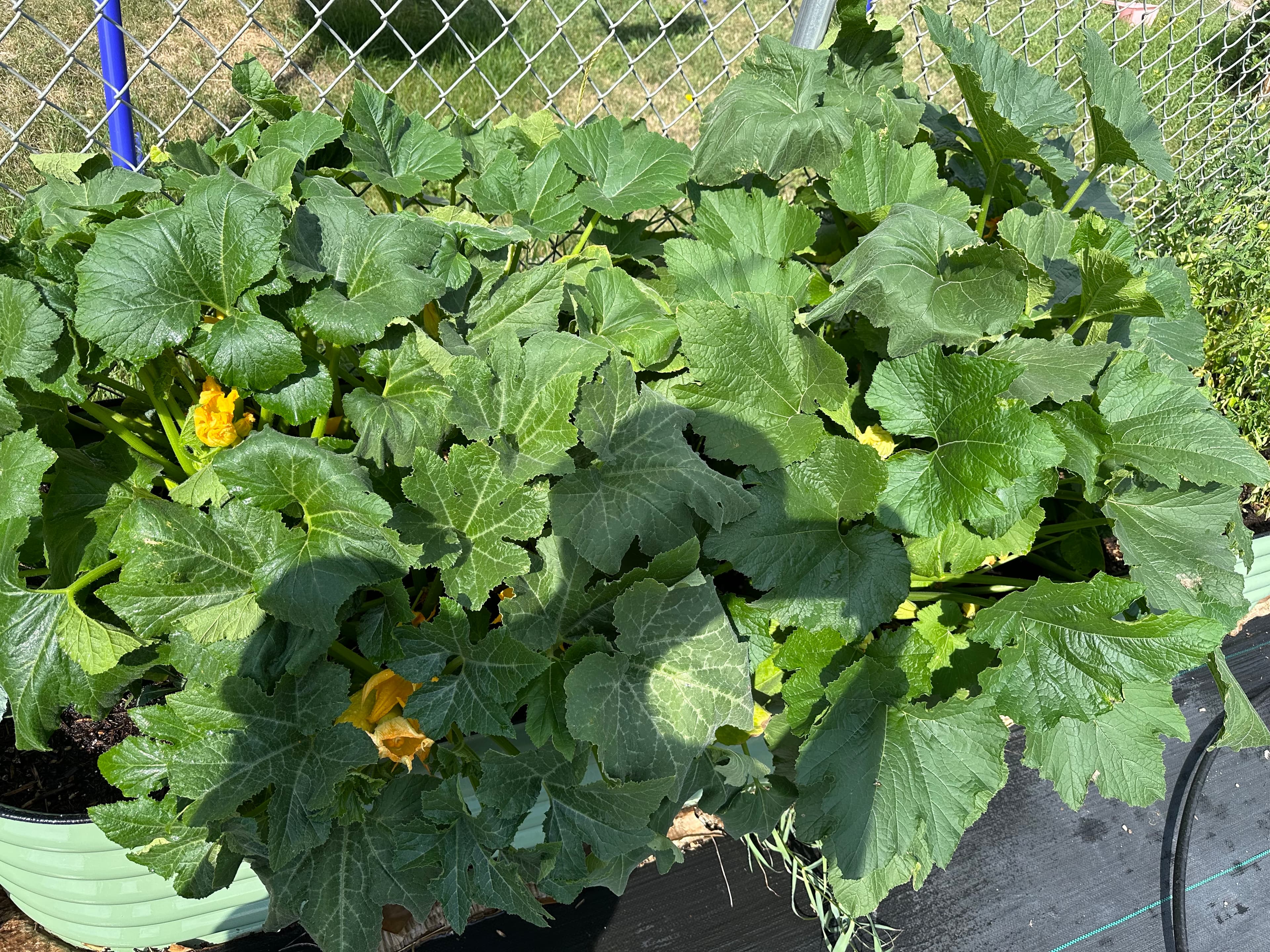
Best use: rapid warm-season production.
Cucumbers
Cucumbers are surprisingly quick on paper — UMN lists the crop broadly around 50–60 days. The catch is temperature. Cucumbers are much more sensitive to cold than spinach, peas, or cabbage. University of Minnesota Extension groups cucumbers among the crops most sensitive to cold temperatures. In a very short season, transplants can help, but don't start them so early that the plants become large and stressed before they can go outside.
So again: fast does not necessarily mean cold tolerant.
Best use: quick summer crop once real warmth arrives.
Tomatoes in a Short Season
Tomatoes deserve their own section because they're exactly the kind of crop that proves short-season gardening doesn't have to mean giving up warm-season favorites.
I grow tomatoes even though they are not the easiest possible choice for my climate. The trick is treating tomato varietyas the decision — not simply “tomato.” A long-season beefsteak and a short-season cherry tomato can behave very differently in the same garden. University of Wyoming Extension specifically recommends matching variety maturity to the available season, noting that shorter-maturity cultivars are important where the season is limited.
Tomatoes are usually worth starting indoors or buying as healthy transplants. Then I look for realistic days to maturity, fruit size, whether the variety is known for earlier production, and how much season remains after transplanting. I still care about flavor — I just don't want to choose a fantastic tomato that turns into a pile of green fruit the week cold weather arrives.
I'd rather have an early variety reliably ripen than choose entirely by catalog description and hope the season stretches long enough. That doesn't mean every tomato needs to be the absolute earliest variety available — it means maturity time belongs near the top of the decision.
For more on how tomatoes fit into a whole-garden plan, see the complete backyard food-garden planning guide.
Peppers: Possible, But They Need the Head Start
Peppers are more demanding. They need a long warm window and can be slow early in life. In my climate, peppers aren't something I'd casually direct sow and hope for the best. They deserve an indoor start, careful hardening, warm soil, one of the warmer garden locations, and realistic cultivar selection.
A short-season gardener can absolutely grow peppers. The point is that peppers use more of your seasonal margin than spinach or bush beans. If the goal is maximum reliability, I wouldn't make peppers the foundation of the garden. If the household loves peppers, though, they're worth allocating some protected space.
Best use: high-value crop given an indoor head start.
Sweet Corn: Pay Attention to the Cultivar
Sweet corn is another crop where the vegetable name tells you almost nothing about whether it fits your garden. UMN lists sweet corn broadly between about 60 and 100 days. That's a 40-day range — in a short season, that's enormous. An earlier corn cultivar may fit comfortably while a later one is gambling against the first fall freeze.
Corn also needs enough plants grown together for good pollination, so it consumes more garden space than a single tomato plant. That doesn't mean don't grow it — it means corn should earn its space.
Best use: early-maturing cultivars where adequate block space is available.
Winter Squash and Pumpkins: Worth Growing, But Watch the Clock
Winter squash and pumpkins are some of my favorite examples of a crop that makes sense for food resilience but can be risky in a short climate. The appeal is obvious: large fruits, substantial food, storage potential, and some varieties can keep for months under appropriate conditions.
The problem is time. Many winter squash and pumpkin varieties need a substantial warm-season window. In a short-season garden, I would look hard at the maturity date before giving a vine a huge amount of space. This is also where season extension can help on both ends. You don't need the biggest pumpkin — you need the pumpkin that actually ripens.
Best use: storage crop when a suitable early cultivar fits the season.
Melons and Eggplant: Higher-Risk Choices
This is where I become more selective. Melons and eggplant aren't impossible in cold climates. But if the goal is dependable household food production, they usually aren't the first crops I'd rely on. University of Minnesota Extension categorizes melons among the crops extremely sensitive to cold temperatures. Cold soil, chilly nights, and an early fall can all reduce the margin.
That doesn't mean I would never grow them. Gardening is allowed to be fun. I'd simply treat them differently. A melon can be an experiment. Carrots don't need to be. That distinction helps when deciding how much space each crop deserves.
Don't Judge a Vegetable Only by Days to Maturity
A 50-day frost-tender crop and a 50-day frost-hardy crop do not give you the same flexibility. Days to maturity should be considered alongside cold tolerance, soil-temperature needs, whether the crop is direct seeded or transplanted, whether maturity is counted from seed or transplant, whether you get one harvest or repeated harvests, storage value, and how much space the crop occupies.
Utah State University Extension points out that days-to-maturity can be measured differently depending on how the crop is normally grown. So don't compare packet numbers blindly — a tomato listed at 65 days usually does not mean you'll be eating tomatoes 65 days after putting the seed under lights.
A Better Short-Season Scorecard
| Crop | Speed | Cold Tolerance | Storage Value | Repeated Harvest | Overall Short-Season Role |
|---|---|---|---|---|---|
| Radish | Excellent | Good | Low | Succession | Quick filler crop |
| Spinach | Excellent | Excellent | Low | Possible | Spring/fall workhorse |
| Peas | Good | Good | Moderate | Limited | Early-season producer |
| Carrots | Good | Good | High | No | Storage crop |
| Beets | Good | Good | Moderate/high | Greens + root | Compact storage crop |
| Bush beans | Excellent | Poor | Moderate if dried variety | Repeated picking | Fast summer producer |
| Summer squash | Excellent | Poor | Low | Excellent | High-output summer crop |
| Cabbage | Moderate | Excellent | High | No | Cold-climate storage crop |
| Tomatoes | Moderate/variety dependent | Poor | Preservation potential | Excellent | Valuable warm-season crop |
| Peppers | Slower | Poor | Preservation potential | Repeated | Higher-effort warm crop |
| Sweet corn | Variety dependent | Poor | Moderate | No | Space-intensive crop |
| Winter squash | Slower/variety dependent | Poor | Excellent | No | Storage crop with season risk |
This is a practical planning framework, not a scientific rating system. It combines the crop biology discussed in Extension sources above with YardCalc's practical goal of choosing crops that make good use of a short season.
Best Short-Season Vegetables by Goal
Fastest useful crops
- Radishes
- Spinach
- Mustard greens
- Leaf lettuce
- Swiss chard
Best for cool weather
- Spinach
- Peas
- Cabbage
- Broccoli
- Radish
- Carrots
- Beets
Best warm-season crops with relatively fast payoff
- Bush beans
- Zucchini / summer squash
- Cucumbers
Best storage-oriented choices
- Carrots
- Beets
- Potatoes
- Cabbage
- Onions where adapted
- Winter squash where the season permits
Best crops to learn seed saving
Beans, peas, and open-pollinated tomatoes and peppers are relatively approachable starting points. See the parent food-garden guide's seed-saving section for the full breakdown.
Think in Two Seasons, Not One
Cold-climate gardeners sometimes think they have one tiny summer. For some crops, it's more useful to think cool season → warm season → cool season:
- Spring: spinach, peas, radish, lettuce
- Summer: beans, squash, cucumber, tomatoes
- Late summer/fall: spinach again, radish again, lettuce, appropriate roots/greens started early enough
University of Minnesota Extension specifically recommends using first-frost timing when planning fall vegetables, noting that frost-tolerant crops can keep producing after frost-sensitive crops are finished. That can turn a supposedly short garden season into several crop windows.
Succession Planting Matters More When the Season Is Short
A short season makes garden space more valuable, not less. If a radish crop finishes in spring and the bed sits empty until October, the short season wasn't the only limitation — the planning was.
Possible sequences include radishes → bush beans, spinach → summer squash, peas → fall greens, or early lettuce → another crop. The exact sequence depends on your frost dates and crop maturity; not every sequence fits every climate. The goal is to ask “What can this space grow next?” rather than automatically leaving it empty after one harvest.
Choose the Variety, Not Just the Vegetable
This may be the single most important shopping lesson for cold-climate gardeners. Don't put “tomatoes” on the seed list — put “tomato variety that can reliably mature in my season.” Don't put “sweet corn” — put “early-maturing sweet corn.” Don't put “pumpkin” — put “pumpkin with a maturity window that actually fits.”
Local Extension trials can be especially useful here because variety performance in a northern or high-elevation climate is more informative than a national popularity list. Colorado State University Extension specifically recommends checking the seed packet or catalog for “days to harvest” and choosing the shortest realistic option for high-elevation and short-season gardens, and University of Wyoming Extension maintains similar cold-climate vegetable guidance.
Leave Yourself Some Weather Margin
If my theoretical growing window is 120-something days, I don't want every major crop requiring 120 days under ideal conditions. That's not much of a plan. Seed-packet maturity is not a guaranteed delivery date. Plants can lose time to cool stretches, transplant shock, wind, heat, hail, irrigation problems, pests, disease, and early fall weather.
I don't use a fixed mathematical safety margin. I just prefer not to build the entire garden around crops that barely fit on paper. The tighter the timing, the more I want a shorter cultivar, a transplant, season protection, or a backup crop.
Use Transplants Where They Actually Buy You Something
Indoor seed starting is most valuable when outdoor time is the limiting factor. For short-season gardeners, that makes it especially useful for crops such as tomatoes, peppers, eggplant, some brassicas, and potentially cucumbers or squash where carefully timed.
But starting every crop indoors is unnecessary. Carrots don't benefit from being transplanted. Peas generally don't need months under grow lights. Bush beans grow quickly once the soil is warm. Use indoor space where it buys meaningful season — see the parent guide's direct-sow vs. transplant breakdown for the crop-by-crop defaults.
Season Extension Can Turn a Borderline Crop Into a Reasonable One
A few degrees at the right moment can matter. Useful tools include floating row cover, frost cloth, low tunnels, cold frames, high tunnels, and protected microclimates. Colorado State University Extension notes that floating row covers can provide frost protection, reduce wind on tender plants, and screen some insects — depending on the material and grade, some can provide up to roughly 10°F of frost protection. University of Wyoming Extension maintains similar resources on row covers, low tunnels, and cold frames for meaningfully extending the usable growing season.
Don't overstate this. A frost blanket does not turn Wyoming into Georgia. But protecting a crop during one marginal spring or fall night can matter enormously.
Use the Warmest Parts of Your Yard Strategically
Not every garden bed has the same climate. A protected bed with full sun can behave differently from a low spot where cold air settles, a windy corner, a north-facing location, or a shaded bed — that's a microclimate.
I wouldn't waste the warmest, most protected garden location on spinach if I have peppers struggling for enough heat. Instead: cool-tolerant crops can use the less-perfect spaces, and warm-season crops get the premium real estate. That's a small decision that can make a short-season garden much more efficient.
What I Would Prioritize in a Short Wyoming Growing Season
If I were building my own garden around reliability in a short Wyoming season, I'd want several different types of crops rather than betting everything on warm-season vegetables.
I'd want early food like spinach, peas, or lettuce. I'd want useful root or storage crops such as carrots, beets, or potatoes. I'd want a fast summer producer like bush beans or zucchini. I'd still make room for tomatoes because we actually want tomatoes, even though they take more planning. I'd consider an early sweet corn if I had enough room. And I'd grow some winter squash or pumpkins if I had a variety whose maturity time gave me a realistic chance of finishing before fall.
That gives me something productive in several parts of the season instead of making the entire garden wait for August.
The goal isn't to choose the easiest vegetables on paper. It's to choose a mix that actually produces food we want to eat.
Short-Season Crops I Would Treat as Experiments
Not everything needs to maximize pounds of food. Sometimes you just want to try growing something. That's fine. But if reliability or resilience is the objective, separate experiments from foundation crops.
Potential higher-risk choices in a cold/short climate include long-season melons, slow eggplant varieties, very long-season peppers, late sweet corn, giant pumpkins, long-maturity winter squash, and any cultivar whose maturity date barely fits the season.
A couple of experimental plants can be fun. Half the garden devoted to crops that need perfect weather is a different decision.
Use cold tolerance to stretch the edges of the season. Use speed to make the most of summer. Use transplants and protection for the warm-season crops worth the extra effort.
That's a much better system than simply searching for a list of “cold climate vegetables.”
Short-Season Vegetable Planning Checklist
- How many days to maturity?
- Is maturity counted from seed or transplant?
- Is the crop frost tolerant?
- What soil temperature does it need?
- Does it need an indoor start?
- Is there enough margin before fall frost?
- Does it produce once or repeatedly?
- Will we actually eat it?
- Can it be stored or preserved?
- Is there a faster cultivar if this one is borderline?
- Do I have a warmer microclimate available?
- Can season extension realistically help?
For the full planning system behind this checklist, see How to Plan a Backyard Food Garden.
Common Short-Season Gardening Mistakes
| Mistake | Better Approach |
|---|---|
| Choosing by crop name alone | Compare specific cultivars |
| Looking only at USDA zone | Use frost dates, soil temperature, and maturity time |
| Assuming fastest means most useful | Consider storage, repeated harvest, and household use |
| Planting frost-tender crops too early | Wait for appropriate soil/weather conditions |
| Skipping warm-season crops completely | Use early varieties and transplants selectively |
| Choosing only warm-season crops | Use cold-tolerant crops at both ends of the season |
| Using every available day on paper | Leave some weather margin |
| Starting every vegetable indoors | Transplant only when it provides a real advantage |
| Ignoring fall planting | Use remaining season for appropriate cold-tolerant crops |
| Giving premium warm garden space to cold-hardy crops | Reserve warmer microclimates for heat lovers |
| Planting a crop nobody eats | Let household demand influence garden space |
Frequently Asked Questions
- What vegetables grow fastest in a short growing season?
- Radishes, mustard greens, spinach, leaf lettuce and some other leafy greens are among the quickest practical crops. Bush beans and summer squash can also produce relatively quickly once warm weather arrives, although they are frost tender.
- What vegetables are best for cold climates?
- Cold-tolerant vegetables such as spinach, peas, radishes, cabbage, broccoli, carrots, beets and other cool-season crops are reliable choices. Warm-season vegetables can still be grown successfully if their maturity requirements fit the local season.
- Can I grow tomatoes with a short growing season?
- Yes. Choose relatively early cultivars, start plants indoors or purchase transplants, harden them properly and wait for appropriate outdoor conditions. Variety selection is especially important because tomato maturity times vary significantly.
- What does days to maturity mean?
- Days to maturity is an estimated time to harvest, but the starting point differs by crop. It may mean days from direct seeding or days from transplanting. Always check the seed packet and cultivar information.
- What warm-season vegetables mature quickly?
- Bush beans, cucumbers and summer squash can mature relatively quickly after conditions warm. Their short maturity does not make them frost tolerant, so planting timing still matters.
- What vegetables can survive a light frost?
- Many cool-season crops can tolerate light frost, including spinach, peas, radishes, broccoli, cabbage, carrots and beets, although tolerance varies by crop, cultivar, plant age and conditions.
- What vegetables are good for storage in a short-season climate?
- Depending on local conditions, carrots, beets, potatoes, cabbage, onions and appropriately selected winter squash can provide useful storage potential. Choose cultivars that will mature within the available season.
- Is corn worth growing in a short season?
- It can be. Sweet corn ranges widely in maturity time, so an early cultivar can be much more realistic than a late one. Corn also requires enough plants and space for good pollination, so consider whether it earns the garden area it uses.
- How can I extend a short vegetable-growing season?
- Starting selected crops indoors, using shorter-maturity varieties and protecting crops with floating row covers, low tunnels, cold frames or other season-extension methods can add usable growing time.
- Should I only grow fast vegetables in a cold climate?
- No. Speed is only one consideration. A useful garden can combine quick crops, cold-tolerant crops, storage crops and carefully selected warm-season crops. The goal is reliable food production over the whole season.
Short Seasons Reward Better Planning
A short growing season is a constraint. It isn't a reason not to grow food. If anything, it forces you to become better at choosing varieties, using garden space, and paying attention to timing.
I don't expect my Wyoming garden to behave like a garden in a much warmer climate. I don't need it to. I can use spinach and peas while conditions are cool. I can wait for genuinely warm conditions before planting beans and squash. I can give tomatoes a head start indoors. I can choose corn and pumpkins with maturity dates that make sense here. And I can use the colder ends of the season instead of treating them as wasted time.
The goal isn't to squeeze every possible vegetable into the garden. It's to build a mix of crops that reliably finishes where you actually live.
Planning the Entire Garden?
- How to Plan a Backyard Food Garden: What to Plant, When to Plant & How to Save Seed — the complete planning system this article builds on
- Raised Bed Calculator — soil volume for any bed dimensions
- Raised Garden Bed Guide — sizing, materials, and soil mix
- Drip Irrigation for Raised Beds, Gardens, and Flower Beds — watering a mixed cool/warm-season garden
- Month-by-Month Landscaping Calendar — where seed-starting and planting fit into the rest of the year
- How to Prepare Garden Beds for Winter — closing out the season once frost arrives
Ready to run the numbers?
Picking crops for a new bed? Calculate how much soil you'll need before building or filling it.
Calculate My Raised Bed Soil