
How Much Grass Seed Do I Need? Coverage, Rates & Cost
Most new lawns need 5–10 lb per 1,000 sq ft; overseeding uses 2–5 lb. For a 5,000 sq ft tall-fescue lawn at 8 lb/1,000 sq ft, you need 40 lbs — four 10-lb bags. Always use the rate on the product label, not the coverage claim on the front. Use the Grass Seed Calculator for exact bag counts.
Disclosure: YardCalc may earn a commission from purchases or referrals made through links on this page, at no extra cost to you.
Grass seed is sold by the pound, but lawns are measured in square feet. To know how many bags to buy, you need three numbers: the square footage of your planting area, the recommended seeding rate for your grass type, and whether you are starting a new lawn or overseeding an existing one.
A 10-pound bag might cover about 1,250 square feet for a new lawn but roughly 2,500 square feet when overseeding, depending on the labeled application rate. Using the coverage claim on the front of the bag without checking which application it applies to is one of the easiest ways to buy too little — or spend twice as much as necessary. Use the grass seed calculator to get exact pounds, bag counts, and cost for your lawn size.
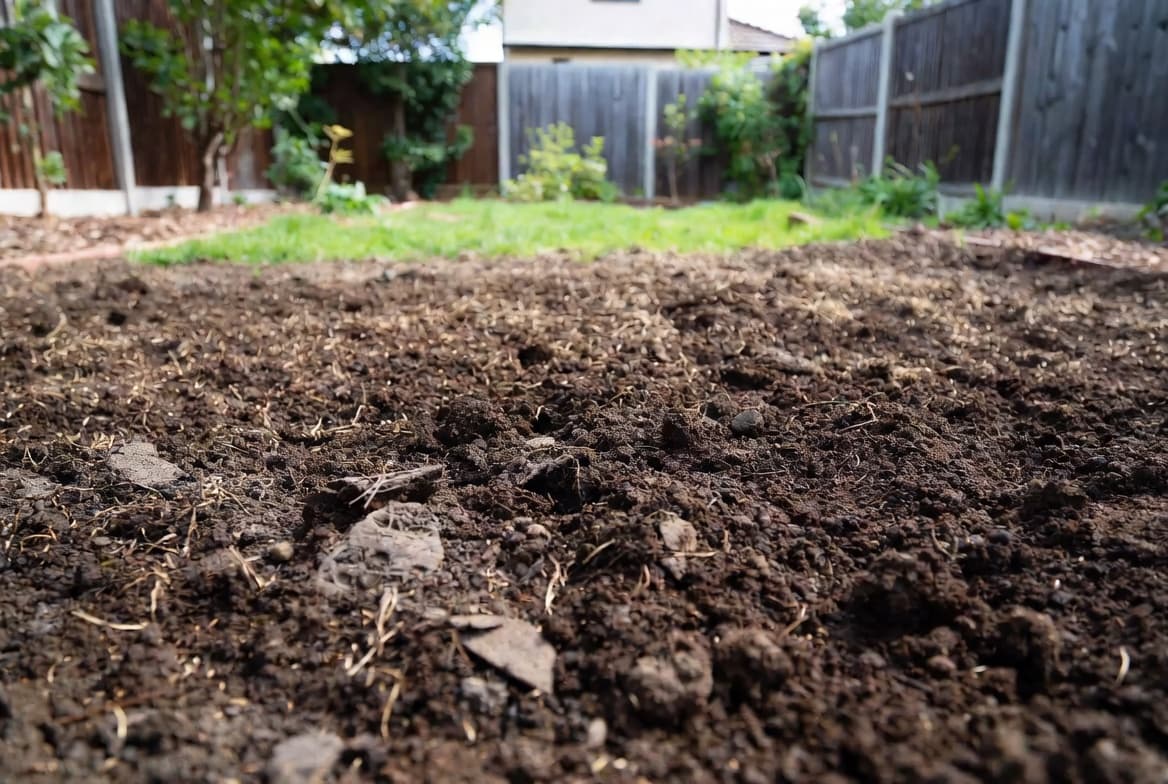
Quick Answer: How Much Seed Do You Need?
New Lawn
Bare or mostly bare soil
5–10 lb
per 1,000 sq ft
- Freshly graded or tilled soil
- After complete lawn removal
- Post-construction or new topsoil
- Large bare patches (>50% of area)
Overseeding
Into existing turf
2–5 lb
per 1,000 sq ft
- Thickening a thin lawn
- Filling scattered gaps
- Improving variety or color
- Repairing moderate damage
These are planning ranges, not substitutes for the product label. Grass species, seed coatings, germination percentages, and blended products all affect the labeled rate. Use the number printed on the bag — not the coverage claim on the front.
The Formula
Grass seed is calculated in pounds per 1,000 square feet. The formula is:
Lawn Area (sq ft) ÷ 1,000 × Seeding Rate (lb) = Pounds of Seed
A 4,000 sq ft lawn at 8 lb/1,000 sq ft: 4,000 ÷ 1,000 × 8 = 32 pounds
To convert pounds to bags, divide by the bag weight and round up — you can't buy a fraction of a bag.
Pounds Needed ÷ Pounds per Bag = Bags (round up)
32 lb ÷ 10 lb/bag = 3.2 → 4 bags
Worked Example: 5,000 sq ft Tall Fescue Lawn
The same lawn overseeded at 4 lb/1,000 sq ft needs 21 lb — three 10-lb bags. This is why checking whether the bag coverage figure applies to a new lawn or overseeding is so important: the same 5,000 sq ft lawn requires twice as much seed when starting from bare soil.
Seeding Rates by Grass Type
Seed size varies dramatically between species. Kentucky bluegrass seed is tiny; tall fescue is much larger. Rates reflect this — lighter seed covers more area per pound.
| Grass Type | New Lawn (lb/1,000 sq ft) | Overseeding (lb/1,000 sq ft) | Best Climate |
|---|---|---|---|
| Tall fescue | 6–10 | 3–5 | Cool-season / transition zone |
| Kentucky bluegrass | 2–3 | 1–2 | Cool-season |
| Perennial ryegrass | 5–10 | 3–5 | Cool-season |
| Fine fescue | 4–6 | 2–4 | Cool-season / shade |
| Bermudagrass (hulled) | 1–3 | 0.5–1.5 | Warm-season |
| Zoysiagrass | 1–2 | Follow label | Warm-season |
| Centipedegrass | 0.25–0.5 | Rarely overseeded | Warm-season |
| Cool-season blend | 5–10 | 2–5 | Cool-season / transition |
Coated seed, low-germination lots, and specialty cultivars may have different labeled rates. The table above is for planning purposes only — the product label always takes precedence.
New Lawn vs. Overseeding
When to use the new-lawn rate
Use the higher rate when planting on bare or mostly bare soil — freshly graded sites, areas where the old lawn was completely removed, land disturbed during construction, or newly placed topsoil. Proper soil preparation before seeding matters as much as the rate. Follow the lawn soil preparation guide to correct drainage, loosen compacted soil, adjust pH, and create a seedbed before applying seed.
When to use the overseeding rate
Overseeding adds seed to existing turf. Because established grass already covers part of the surface, less seed is needed. Use the lower rate when thickening a thin but established lawn, filling scattered gaps, introducing an improved variety, or restoring color after moderate summer or winter damage. Overseeding too heavily creates unnecessary competition among seedlings.
How Many Bags Do You Need?
| Seed Required | Bag Size | Bags to Buy |
|---|---|---|
| 18 lb | 10 lb | 2 |
| 24 lb | 10 lb | 3 |
| 32 lb | 20 lb | 2 |
| 42 lb | 10 lb | 5 |
| 75 lb | 25 lb | 3 |
Always round up. Bag sizes vary by retailer and product. Compare the total cost for the whole project rather than the price displayed per bag — a larger bag often costs significantly less per pound.
How Much Extra Should You Buy?
For a simple rectangular lawn with accurate measurements, the calculated amount is usually sufficient. Add 5–10% extra when:
- The lawn has curved or irregular borders
- Trees, beds, and paths make measurement difficult
- You are using a handheld or walk-behind spreader with occasional overlap
- Several thin or bare spots need extra coverage
- You want seed left for future patching
Do not dramatically exceed the recommended rate just because extra bags are available. Save the remainder in a sealed bag in a cool, dry place for repairs.
How to Measure Your Lawn
Subtract patios, driveways, garden beds, buildings, and other surfaces that won't receive seed. Only count plantable area.
| Shape | Formula | Example |
|---|---|---|
| Rectangle | Length × Width | 60 ft × 40 ft = 2,400 sq ft |
| Circle | 3.14 × radius² | 3.14 × 15² = 707 sq ft |
| Triangle | 0.5 × Base × Height | 0.5 × 30 × 20 = 300 sq ft |
| Irregular | Break into rectangles, add totals | Front + side + back yards |
For complex yards, measure each section separately then add them up. Slightly overestimating the plantable area is better than underestimating and coming up short.
Why Some Bags Cover More Than Others
Two bags of the same weight can advertise very different coverage. The main reasons:
Seed coating
Coatings add weight without adding viable seed. A 10-lb coated bag may contain fewer actual seed kernels than a 10-lb uncoated bag.
New lawn vs. overseeding
Coverage claims on the front of bags often refer to the overseeding rate, which uses half as much seed. Read the back label.
Germination percentage
Higher-quality seed has a higher germination percentage, so more seeds produce plants. Cheaper seed with 70% germination requires more pounds to produce the same stand.
Filler material
Some products include fertilizer, mulch, or inert material by weight. Compare pure seed percentages on the analysis label, not just price per bag.
Read the analysis label on the back of the bag — it shows the pure seed percentage, germination rate, weed seed percentage, and crop seed content. A product with 95% pure seed and 90% germination will establish more reliably than one with 70% germination at the same price per bag.
When to Plant Grass Seed
The right timing matters more than the exact application rate. Seeding at the wrong time often produces poor germination regardless of seed quality.
| Grass Type | Best Window | Secondary Window | Avoid |
|---|---|---|---|
| Cool-season (tall fescue, bluegrass, ryegrass) | Late summer to early fall | Early spring | Peak summer heat |
| Warm-season (bermuda, zoysia, centipede) | Late spring to early summer | — | Fall, frost, cool soil |
| Overseeding cool-season into warm-season | Early fall | — | Spring (too late) |
Fall is the strongest planting window for cool-season grass: soil is still warm from summer, air temperatures are cooler, weed competition decreases, and natural rainfall often increases. See the month-by-month landscaping calendar for the best timing across all yard projects.
How to Apply Grass Seed
The most effective technique for even coverage is a two-pass cross-pattern:
Divide seed into two equal portions
One half goes on the first pass, the other on the second. This prevents running out before covering the full area.
Apply the first half in parallel rows
Walk at a consistent pace. Overlap wheel paths on a broadcast spreader slightly to avoid visible stripes.
Apply the second half perpendicular to the first
Walking 90° to the first pass fills in any missed areas and creates more even distribution.
Rake lightly to improve soil contact
Seed sitting on thatch or loose debris may dry out before germinating. A light raking presses seed toward the soil without burying it.
Water immediately
Keep the surface consistently moist until germination. Depending on species and conditions, germination may take roughly 5 days to several weeks. Light, frequent watering is needed early on.
A broadcast spreader produces far more consistent coverage than hand-casting, especially on lawns over a few hundred square feet. Set it to the manufacturer's recommended opening for the seed you are using.
Should You Cover Grass Seed?
A light covering helps with moisture retention, erosion control, and bird pressure.
| Covering Material | Best For | Note |
|---|---|---|
| Clean straw | Most new lawns | Use weed-free straw, not hay |
| Seed-starting mulch | Small areas and patches | Finer texture, easy to spread |
| Screened compost (thin layer) | Overseeding into existing lawn | Also improves soil at the surface |
| Erosion-control blanket | Slopes and runoff-prone areas | Keeps seed in place during rain |
Do not bury seed under a thick layer of material. Most grass species germinate best within the top ¼ inch of soil. The goal is to reduce surface moisture loss, not to cover seed completely.
Soil Preparation Before Seeding
Seed quantity cannot compensate for poor soil conditions. Address the soil first, then seed.
- Remove debris and dead vegetation. Clear rocks, heavy thatch, weeds, and construction waste before tilling or grading.
- Test the soil. A soil test identifies pH problems and nutrient deficiencies. Most grass species establish best at pH 6.0–7.0.
- Loosen compacted soil. For a new lawn on compacted or disturbed ground, loosen and prepare the upper soil layer as needed. For overseeding, core-aerate compacted turf rather than tilling the existing lawn.
- Incorporate amendments. Add compost or lime based on soil test results. Read Topsoil vs. Compost vs. Garden Soil before choosing a product.
- Grade and rake smooth. Correct low spots, slope the surface away from structures, and create a firm, even seedbed.
Need topsoil to correct grade or add depth? Use the topsoil calculator to estimate cubic yards before buying. For the complete preparation sequence, see How to Prep Soil for a New Lawn.
Grass Seed vs. Sod vs. Hydroseeding
Grass Seed
- ✓Lowest material cost
- ✓Widest variety selection
- ~4–8 weeks for early establishment
- ✗Needs consistent watering
- ✗Vulnerable to birds and erosion
Sod
- ✓Immediately green
- ✓Stabilizes soil quickly
- ✗3–5× higher material cost
- ✗Limited grass varieties
- ✗Labor-intensive to install
Hydroseeding
- ✓Good for large areas and slopes
- ✓Built-in mulch and fertilizer
- ~Faster than dry seeding
- ✗Requires professional equipment
- ✗Higher cost than dry seeding
Use the sod calculator to compare quantities and cost if you are weighing seed against sod. For a detailed comparison of both approaches, see Hydroseeding vs. Sod.
Grass vs. Clover
Clover is worth considering as an alternative or supplement. It typically requires 1–2 lb per 1,000 sq ft — substantially less seed by weight than turfgrass — and fixes its own nitrogen, reducing fertilizer needs after establishment. It also tolerates drought and light traffic better than many people expect.
The tradeoff is durability under heavy foot traffic and a different appearance than a conventional lawn. Read Clover Lawn vs. Grass for a full comparison, and use the clover lawn calculator to estimate seed for a pure clover or mixed planting.
Common Mistakes
| Mistake | Why It Causes Problems |
|---|---|
| Using the overseeding coverage figure for a new lawn | Bags often show the higher coverage number — the overseeding rate — on the front. For a new lawn you need roughly twice as much seed |
| Applying too much seed | Seedlings compete for resources and thin themselves out; excess seed is wasted |
| Applying too little seed | Open soil allows weeds to establish before grass fills in |
| Seeding at the wrong time of year | Incorrect soil temperature produces poor germination regardless of seed quality |
| Poor seed-to-soil contact | Seed resting on thatch or debris dries out before germinating |
| Letting the surface dry out | Young seed has limited moisture reserves — even one dry day can kill germinating seed |
| Mowing too early | Wait until new grass is tall enough that mowing removes no more than one-third of the blade |
Frequently Asked Questions
- How much grass seed do I need per 1,000 square feet?
- Most new lawns use 5–10 lb per 1,000 sq ft; overseeding uses 2–5 lb. The right rate depends on the species — tall fescue needs 6–10 lb for a new lawn while Kentucky bluegrass needs only 2–3 lb. Always use the rate on the product label.
- How many bags do I need for a 5,000 sq ft lawn?
- At 8 lb per 1,000 sq ft, a 5,000 sq ft new lawn needs 40 lb before any spreading allowance. Adding 5% brings the estimate to 42 lb — five 10-lb bags. Overseeding at 4 lb per 1,000 sq ft requires 21 lb with the allowance — three 10-lb bags.
- Can you put down too much grass seed?
- Yes. Crowded seedlings compete for water, nutrients, and light, and they thin themselves out over time. Apply the labeled rate — more seed does not produce a thicker mature lawn.
- When is the best time to plant grass seed?
- Cool-season grasses (tall fescue, Kentucky bluegrass, perennial ryegrass) are generally best seeded in late summer through early fall. The exact window varies by region — earlier in colder climates, later where winters arrive late. Warm-season grasses (bermudagrass, zoysia, centipede) should be planted in late spring through early summer once soil temperatures are consistently above 65°F.
- How many square feet does a 10-pound bag cover?
- At 8 lb per 1,000 sq ft for a new lawn, a 10-lb bag covers about 1,250 sq ft. At 4 lb per 1,000 sq ft for overseeding, it covers 2,500 sq ft. Always confirm which application the bag coverage figure applies to before purchasing.
- Do I need topsoil before seeding?
- Not always. Add topsoil when the site lacks adequate depth, contains poor fill material, or needs significant grading. For most existing lawns being overseeded, loosening and amending the top few inches is more useful than hauling in topsoil.
Estimate Seed Before You Buy
Measure the actual plantable area, subtract surfaces that won't be seeded, and look up the labeled application rate for your specific product. Add only a modest allowance for overlap and spreading loss — 5–10% is typically enough.
Use the grass seed calculator to get exact pounds, bag counts, and estimated cost. Once you have your seed quantities, review How to Prep Soil for a New Lawn before planting — the soil conditions you establish before seeding have more impact on the outcome than any other variable.
Ready to run the numbers?
Enter your lawn dimensions and grass type to get exact seed amounts — pounds, bags, and estimated cost.
Calculate My Grass Seed