
When to Start Vegetable Seeds Indoors: A Frost-Date Guide for Short Growing Seasons
Pick the date each crop can safely go outside, then count backward by how long it needs indoors — roughly 5–7 weeks for tomatoes, 6–8 for peppers, 6–9 for eggplant, and only 3–4 for squash and melons. Frost dates are averages, hardiness zones are about winter survival rather than planting dates, and hardening off takes about two weeks. In a short season, starting too late costs weeks and starting too early produces oversized plants.
Disclosure: YardCalc may earn a commission from purchases or referrals made through links on this page, at no extra cost to you.
Starting seeds indoors is less about picking a date on the calendar and more about working backward from when those plants can safely go outside.
That distinction matters anywhere, but it matters even more in a short growing season.
I garden in Cody, Wyoming, at roughly 5,000 feet, where spring weather can warm up quickly and then turn cold again just as fast. Starting a tomato a week or two late can mean giving away a meaningful part of an already limited growing season. Starting it too early creates a different problem: a giant, root-bound plant that has spent too long indoors waiting for the weather to cooperate.
The goal is not to start everything as early as possible.
It is to have each transplant at the right stage when your garden is actually ready for it.
The Short Answer
Start with your expected outdoor transplant date, then count backward based on how long that crop normally needs indoors before transplanting. For many common vegetables, a practical starting point is:
| Crop | Weeks indoors | Approach |
|---|---|---|
| Onions | About 8 weeks | Start earliest; leeks often longer |
| Broccoli and cabbage | 5–7 weeks | Start indoors for an early crop |
| Peppers | 6–8 weeks | Start indoors |
| Eggplant | 6–9 weeks | Start indoors |
| Tomatoes | 5–7 weeks | Start indoors |
| Lettuce | 3–5 weeks | Optional indoor start |
| Cucumbers | About 4 weeks | Start late or direct sow |
| Melons | 3–4 weeks | Start late; avoid oversized transplants |
| Summer and winter squash | 3–4 weeks | Start late or direct sow |
These ranges are starting points, not fixed deadlines. Variety, germination temperature, light, container size, your local frost pattern, and the actual weather that year can all move the schedule.
Utah State University Extension's transplant timing table is the source for the weeks above. It counts from germinationto transplanting, and lists germination at roughly 4–14 days depending on the crop, so add a week or two to get a sowing date. USU's planning fact sheetcounts from sowing instead, which is why it gives tomatoes as 6–8 weeks. Neither is wrong; they are just counting from different starting points. University of Minnesota Extension's seed-starting schedule also counts from sowing, which is why it shows peppers and eggplant at around nine weeks, tomatoes at five to six, and onions and leeks at 14–15.
USU recommends planning around the average last spring freeze, the crop's cold tolerance, whether it will be direct-sown or transplanted, and its days to maturity.
Start With Your Last Frost Date — But Don't Treat It Like a Deadline
The first step is finding the average last spring freeze for your area.
Then remember what the word average means. In some years the last freeze will come later than the date you are using. Your own yard can also be warmer or colder than the nearest official weather station.
A garden at the bottom of a slope may collect cold air while another garden a few miles away stays several degrees warmer. A south-facing wall may warm significantly earlier than an exposed bed. Elevation can make an enormous difference.
USU makes the same point: published temperatures will not perfectly suit your garden plot, because landscape, elevation and topography all create a microclimate of their own.
That is especially relevant here in Wyoming.
The Wyoming Climate Atlas from the Wyoming State Climate Office describes early fall freezes and late spring freezes as typical across the state, and puts the average freeze-free period for its principal agricultural areas at approximately 125 days. It also notes that in the mountains and high valleys, freezing temperatures can occur at any point in summer. That 125 days is a broad statewide reference — not a promise that any particular garden, including mine in Cody, gets exactly that many.
That is why I use historical frost information as the starting point, not permission to automatically put every tender plant outside.
Hardiness Zone Is Not Your Seed-Starting Calendar
It is easy to look up your USDA hardiness zone and assume that tells you when to start tomatoes.
It doesn't.
Hardiness zones are based on average winter low temperatures, and USU notes they are more critical for perennials than for annual vegetables, because they indicate whether a plant's root system can survive the winter.
For annual vegetables, spring and fall freeze dates, soil temperature, crop tolerance, and growing-season length are much more useful. Two gardens in the same hardiness zone can have meaningfully different spring planting dates.
For seed starting, I care much more about:
When can this crop safely go outside?
Then I work backward.
How to Calculate Your Indoor Seed-Starting Date
A simple way to think about it is:
Indoor sowing date = planned transplant date − time needed indoors
If I expect tomatoes to go outside around a particular week and I want plants roughly six weeks old at transplanting, I count backward six weeks. Then I check the seed packet.
This is important because references count timing slightly differently. Some describe the number of weeks after germination, while a packet may give a simpler “start indoors 6–8 weeks before transplanting” instruction. University of Wyoming Extension's guide to starting plants from seed indoors suggests sorting your packets into groups by the recommended weeks before the average last frost, then marking those dates on the calendar.
It also helps to keep records. If a tomato started in late March has outgrown its container weeks before it can safely go outside, that is useful information for next year. I try to write down what I start, when, and how the plants look on transplant day. Garden records become more valuable than a generic planting chart after a few seasons.
Why Short-Season Gardeners Benefit More From Indoor Starts
In a warm climate with a long frost-free season, losing a couple of weeks may not matter very much. In Wyoming, it can.
Warm-season crops such as tomatoes, peppers, eggplant, and some longer-season squash need enough warm weather not just to survive, but to flower, set fruit, and ripen it.
That is why I pay close attention to both indoor starting dates and days to maturity when choosing seed. If two tomatoes look equally appealing but one matures substantially earlier, the earlier variety may be a much better fit for my garden. USU suggests considering season-extension techniques when a crop's days to maturity are longer than your average number of freeze-free days.
That does not mean every variety has to be ultra-early. It means the calendar has consequences here.
In warmer climates, you may have more room to start later or direct sow more crops. In Wyoming, where I garden, the short and variable season makes the timing matter more. This is also why I put together my guide to the best vegetables for a short growing season. Variety selection and seed-starting timing solve two parts of the same problem.
Tomatoes: Don't Start Them as Early as You Think
Tomatoes are one of the easiest crops to start too early.
It is tempting to start them in February because you are tired of winter and ready to garden. That can leave you managing oversized tomato plants indoors for weeks.
University of Minnesota Extension's schedule keeps tomatoes indoors roughly five to six weeks, while Utah State guidance puts them at approximately five to seven weeks from germination to transplanting.
For my climate, I would rather have a compact, vigorous tomato transplant that is ready when the weather is ready than an enormous plant that has been sitting in a pot for too long.
I also favor earlier-maturing varieties when possible. An early cherry tomato, for example, gives me more margin than relying entirely on long-season tomatoes. The exact variety still matters. “Tomato” is not one maturity date.
Peppers and Eggplant Need More Lead Time
Peppers and eggplant are different.
They generally benefit from a longer indoor period, and peppers in particular can be slow to emerge. USU lists peppers at roughly six to eight weeks from germination to transplanting and eggplant at six to nine, with germination in the 65–85°F soil range for both.
These are the crops I am much more comfortable starting well ahead of tomatoes. If you are gardening somewhere with a long, warm growing season, you have more flexibility. Here, I want peppers to have a meaningful head start before they ever see the garden.
Broccoli, Cabbage, and Other Cool-Season Transplants
Not everything you start indoors is a heat-loving crop.
Broccoli, cabbage, and similar crops can be started indoors so they are ready to take advantage of cool spring conditions. That creates a different timing problem: you do not necessarily want to wait until after the last frost to transplant hardy or semi-hardy vegetables. Depending on the crop and conditions, they may be able to go outside earlier.
This is where crop tolerance becomes more useful than applying one frost date to the entire garden. A tomato and a cabbage should not be using the same transplant rule.
What I Usually Wouldn't Start Indoors
Some vegetables are better direct-sown. Carrots are the obvious example, and USU specifically names carrots and peas as crops that are not adapted to being grown as transplants. Their roots do not appreciate being disturbed.
Beans, corn, radishes, and many other fast-growing crops generally do not need an indoor head start under ordinary conditions.
Cucumbers, melons, and squash fall somewhere in between. They can be started indoors, especially when a short season makes every week valuable, but they should be started relatively late. They grow quickly and do not benefit from sitting indoors as oversized transplants. For squash, that may mean only three or four weeks indoors — or simply direct sowing once conditions are warm enough.
The goal is not to transplant everything. The goal is to use transplanting where it solves a real timing problem. For a broader look at which crops make sense in a cold climate, see my short-growing-season vegetable guide.
Light Matters More Than a Sunny Window
One of the easiest seed-starting mistakes is assuming a bright window provides enough light. Sometimes it can work for a few plants, but it is not the setup I would choose for a larger batch of seedlings.
University of Minnesota Extension specifically advises against the windowsill: it can be the coldest place in the house at night and the hottest during the day, and windowsill seedlings tend to be tall and thin. It recommends fluorescent or LED lights kept within a few inches of the seedlings for 12 to 16 hours a day. Utah State adds that you do not need special, expensive grow lights — simple shop lights with fluorescent or LED bulbs are sufficient.
Leggy seedlings are usually telling you something. If plants are tall, thin, leaning hard toward the light, or falling over, simply starting them earlier will not fix the problem. They need better growing conditions.
A basic seed-starting setup does not need to be elaborate. Good light placed close to the seedlings, containers with drainage, a proper seed-starting mix, and consistent moisture solve most of the problem.
Warm Media Helps Warm-Season Seeds Germinate
Air temperature and growing-medium temperature are not always the same. USU lists an optimum germination temperature of 65–85°F for tomatoes, peppers, eggplant, cucumbers, melons and squash, while cool-season crops such as lettuce germinate at lower temperatures.
A seedling heat mat can help with crops such as peppers and eggplant if your seed-starting area runs cool. USU notes that inexpensive heat mats under the trays are likely to be needed in a cooler room if you want to grow warm-season crops. It is optional, not mandatory. Once the seedlings are growing, USU says most transplants prefer daytime air temperatures of roughly 60 to 80°F; the cooler end of that range gives tougher plants that take a bit longer to grow.
Use a soilless seed-starting mix rather than ordinary garden soil. Extension guidance recommends commercial mixes because they are lightweight, sterile, and free of weed seeds and pathogens.
Don't Forget Airflow
Once seedlings emerge, they need more than light and water. Utah State recommends removing the humidity dome once roughly half of the seeds have germinated and providing air circulation, noting that a small fan is a simple way to do it. Moving air helps deter fungal problems and can help seedlings develop stronger stems.
That is especially useful in a basement, spare room, or other indoor location where air would otherwise sit relatively still. You are trying to grow garden plants, not keep them in a sealed terrarium.
Hardening Off Is Part of Seed Starting
The indoor phase is not finished when the seedlings reach transplant size. They still need to adjust to the outdoors. Indoor plants have not experienced full sun, wind, large temperature swings, or the rapid moisture loss that happens outside.
Both University of Minnesota Extension and Utah State University Extension describe a gradual hardening-off period of about two weeks before planting out. Start with a few hours in a protected spot out of direct sun and wind, then gradually increase the time outside and the exposure to sunlight.
Warm-season crops need extra care during this process. USU cautions against exposing tomatoes, peppers, squash, melons, and similar seedlings to freezing temperatures, or to temperatures below roughly 45–50°F.
In Wyoming, that means I pay as much attention to the nighttime forecast as the daytime high. A 65°F afternoon does not help much if the temperature is headed toward freezing overnight.
My Approach in Wyoming
My approach is to work backward rather than forward.
I do not look at February or March and ask, “What can I plant today?”
I ask:
- “When can this crop realistically live outside here?”
- “How old should the transplant be at that point?”
- “When should I sow it?”
That prevents the excitement of seed-starting season from turning into a house full of oversized plants waiting for Wyoming weather to cooperate.
I also increasingly choose varieties with shorter maturation times where it makes sense. That does not mean I only grow 60-day vegetables. It means I pay attention to the number. If I am choosing between two otherwise similar varieties and one buys me two extra weeks of margin, that matters in a short season.
If you are still deciding what belongs in the garden at all, start with my backyard food-garden planning guide.
A Simple Seed-Starting Workflow
For each vegetable I plan to grow, I want to know four things:
1. Direct sow or transplant?
Root crops and fast-growing vegetables often make more sense direct-sown.
2. When can it safely go outside?
That depends on its cold tolerance — not one universal garden date.
3. How many weeks indoors?
Use the seed packet and Extension guidance.
4. Will the variety mature in my season?
Check days to maturity, especially for warm-season crops.
Once you have those four answers, the calendar gets much easier.
What About Seed Packets?
Use them.
A good seed packet may tell you:
- whether to start indoors or direct sow,
- how many weeks before transplanting to start,
- planting depth,
- spacing,
- germination expectations,
- days to maturity.
That information is more useful than blindly following a national planting calendar. Check how days to maturity are counted, too: University of Wyoming Extension points out that it is sometimes based on germination or on the transplant date, so make sure your calculations are accurate.
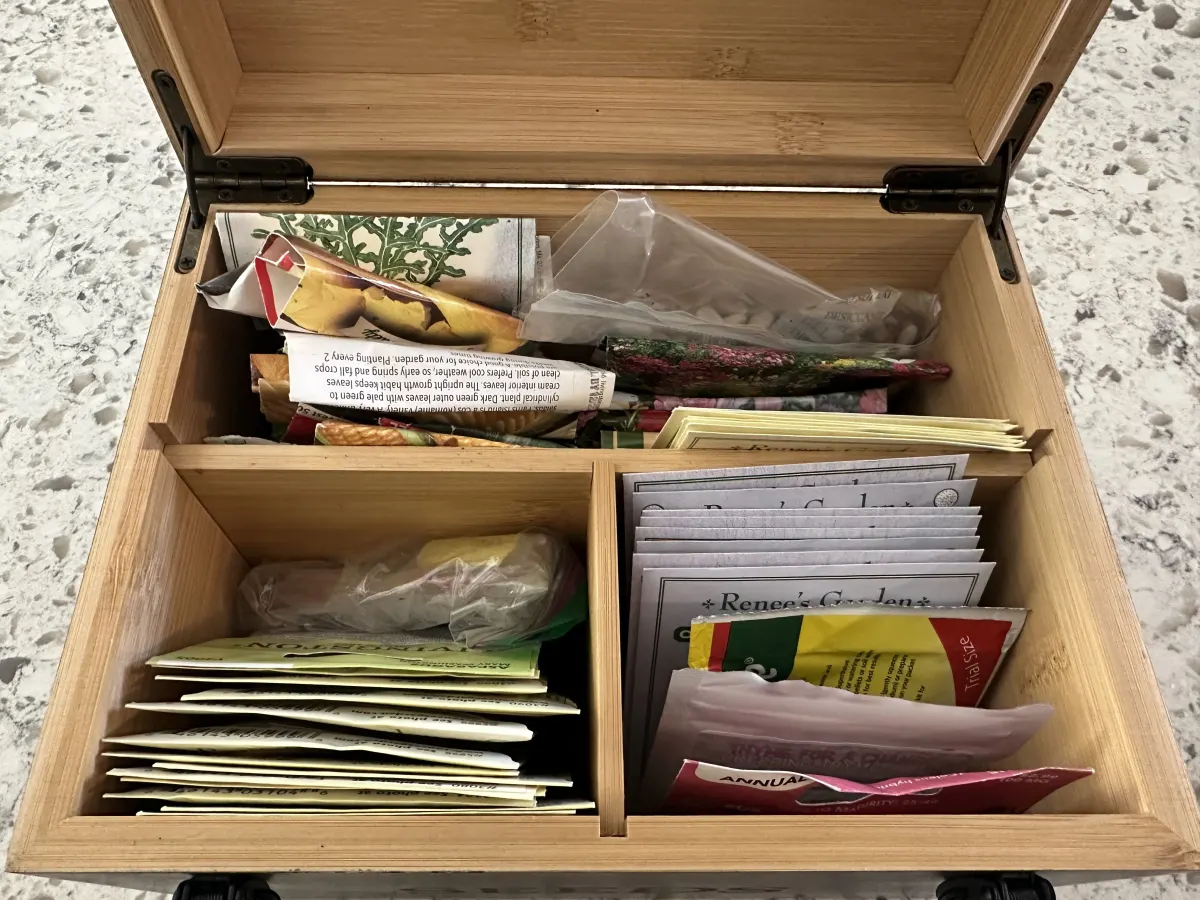
If you are ordering seed for next season, I would choose varieties based on how they fit your climate and garden plan rather than simply picking the biggest fruit or most interesting photograph in the catalog. Where practical, I lean toward shorter-season options, and I like being able to save seed from open-pollinated varieties I want to grow again. Order seed early enough that you can sort packets by start date before the indoor season begins.
Tie Seed Starting Into the Rest of the Garden
Indoor seed starting only solves the first part of the season. Before transplanting, make sure the garden itself is ready.
If you are building or filling beds, the Raised Bed Calculator can help estimate soil volume, and my raised garden bed planning guide covers the larger setup. If you are deciding what to fill those beds with, see Topsoil vs. Compost vs. Garden Soil.
Once plants are established, consistent watering matters too. For beds with multiple vegetables, drip irrigation can reduce the amount of daily hand watering. And for where seed starting fits in the rest of the year, my month-by-month landscaping calendar is a useful companion.
The point is to think about the season as one connected plan rather than treating seed starting as a separate hobby that ends when the plants leave the house.
Frequently Asked Questions
- How many weeks before the last frost should I start vegetable seeds indoors?
- It depends on the crop and on when that crop can safely go outside, which is not always the last frost date. Utah State University Extension lists roughly 5–7 weeks from germination to transplanting for tomatoes, 6–8 for peppers, 6–9 for eggplant and 3–4 for squash and melons. Add the germination period, and always check the variety-specific seed packet.
- Should I start all vegetable seeds indoors?
- No. Many vegetables are better direct-sown. Carrots and peas are not well suited to transplanting, and beans, corn, radishes and other fast-growing crops usually do not need an indoor head start.
- Can I use my USDA hardiness zone to determine when to start seeds?
- Not by itself. Hardiness zones are based on winter minimum temperatures and matter most for perennial plants. Annual vegetable timing is better planned around local freeze dates, crop cold tolerance, soil temperature and growing-season length.
- Is February too early to start tomatoes?
- For many home gardeners, yes. Tomatoes started too early can become oversized and root-bound before outdoor conditions are suitable. Work backward from your expected transplant date: roughly 5–7 weeks from germination, or about 6–8 weeks from sowing, unless the seed packet says otherwise.
- Do seedlings need a grow light?
- Artificial light is the most reliable way to grow compact, healthy seedlings. Extension sources note that simple shop lights with fluorescent or LED bulbs are sufficient, and that windowsills can be too cold at night and too weak in light for good seedlings. A bright south-facing window can sometimes work for a small number of plants.
- Do I need a heat mat?
- Not always. A heat mat is most useful when the seed-starting area is cool and you are germinating warm-season crops such as peppers, eggplant, tomatoes, cucumbers, melons or squash. It is optional if your space is already warm enough.
- When should I harden off seedlings?
- Begin about two weeks before transplanting. Start with a few hours in a protected spot, then gradually increase sun and time outdoors. Keep warm-season seedlings out of cold nights.
- What if my last frost date changes every year?
- That is normal. Frost dates are averages, not guarantees. Use historical climate data to build the schedule, then adjust for the current forecast and what you know about your own garden's microclimate.
Research Sources
This guide draws on the following Extension and climate sources:
- Wyoming State Climate Office, Wyoming Climate Atlas: Temperature — late spring and early fall freezes, and the roughly 125-day freeze-free average for principal agricultural areas.
- University of Wyoming Extension, Barnyards & Backyards, “Starting plants from seed indoors” — days to maturity, seed packet timing, and basic setup.
- Utah State University Extension, Starting Vegetable Seeds Indoors: I. Planning — average freeze dates, cold tolerance, direct sowing vs. transplanting, hardiness zones, and microclimates.
- Utah State University Extension, Starting Vegetable Seeds Indoors: II. Materials — lighting, heat mats, mixes, and fans.
- Utah State University Extension, Starting Vegetable Seeds Indoors: IV. Seedling Culture and Transplanting — airflow, humidity domes, and hardening off.
- Utah State University Extension, Grow Your Own Transplants at Home — weeks from germination to transplanting and germination temperatures.
- University of Minnesota Extension, Starting Seeds Indoors — artificial lighting, windowsill limits, seed-start schedule, and hardening off.
These references are used as planning guidance rather than universal planting dates. Local weather, microclimate, elevation, and cultivar choice still matter.
Ready to run the numbers?
Seedlings almost ready? Calculate how much soil you'll need to fill your beds before transplant day.
Calculate My Raised Bed Soil